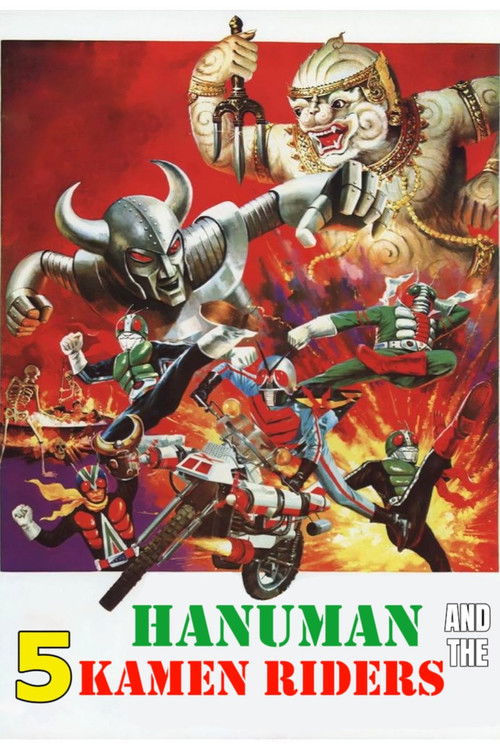
Hanuman and the Five Kamen Riders
1975
No user ratings available yet
Representation score: 3.1 out of 10
Representation Score
Fair
1974
Director
Shohei Tôjô, Sompote Sands
Runtime
103 minutes
Average Rating
No ratings yetNew Showbiz Analysis
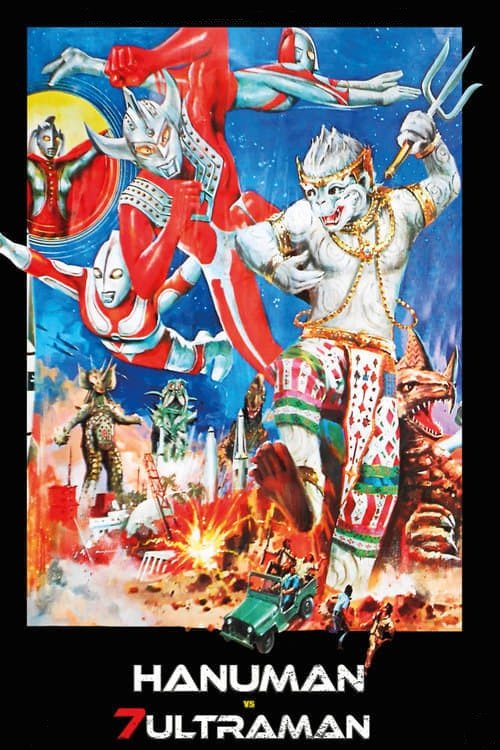
Hanuman and the Seven Ultramen stands out as a unique cross-cultural collaboration that defies the Western-centric norms of 1970s genre cinema. By blending Southeast Asian mythology with the Japanese tokusatsu tradition, the film creates a rare space for non-Western storytelling. However, the film remains limited by traditional character archetypes. The narrative focus is heavily skewed toward male-coded heroism, and there is a notable absence of LGBTQ+ representation or characters with disabilities. Ultimately, the film's strength lies in its cultural synthesis. While it lacks diversity in gender and orientation, its successful integration of diverse mythological frameworks provides a significant departure from the era's typical cinematic hierarchies.
Category Breakdown
The film does not include explicit LGBTQ+ characters or non-straight relationships. It focuses on mythological themes and sci-fi battles, maintaining traditional heterosexual norms.
Heroism is centered around male figures, such as the Thai boy, Hanuman, and Ultraman. These characters play key roles without challenging traditional gender roles.
The film merges Thai mythology with Japanese pop-culture icons, disrupting Anglo-centric genre norms and giving a significant role in driving the story to a non-Western protagonist.
The story combines spiritual elements with science fiction by focusing on a Hindu deity. It also critiques the exploitation of cultural heritage through its depiction of looters.
There are no characters with visible or invisible disabilities in the narrative.
Present on Screen
Limited or Absent
Official Synopsis
After a valiant Thai boy is brutally murdered by a gang of archeological looters, his soul is joined with the Hindu god Hanuman, who teams up with Ultraman and his brethren against familiar Ultra-foes unleashed by a weather control experiment gone awry, in this influential Thai-Japanese co-production.
No reviews yet. Be the first to share your thoughts on this movie!
Use the rating form above to leave a star rating and optional review.