Find another title
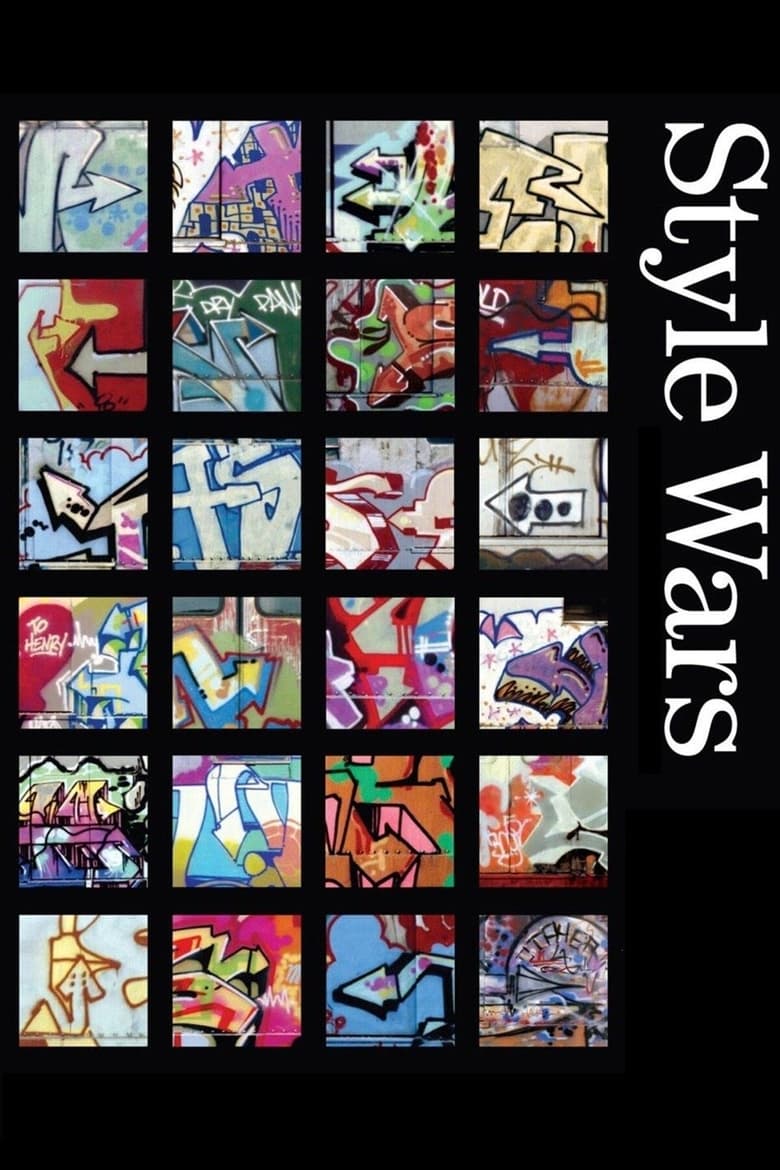
Style Wars
1983
Director
Tony Silver
Runtime
70 minutes
Average Rating
No ratings yetSynopsis
Tony Silver and Henry Chalfant's PBS documentary tracks the rise and fall of subway graffiti in New York in the late 1970s and early 1980s.
Where to Watch
Diversity & Representation
Overall Score
Fair
Category Breakdown
LGBTQ+ Representation
The documentary contains no identifiable LGBTQ+ characters or narratives. The focus remains strictly on the socio-cultural dynamics of the graffiti subculture within its specific era.
Gender Representation
The film reflects the male-dominated reality of the 1980s graffiti scene. While female participants are acknowledged, the movement's social hierarchy is portrayed almost exclusively through male figures.
Racial & Ethnic Diversity
The film excels by centering Black and Latino youth as the primary architects of the culture. It provides a high-agency platform for these communities, documenting their creative output and social struggles.
Religious & Cultural Diversity
The documentary frames the tension between artists and the MTA as a struggle for legitimacy. It deconstructs the concept of vandalism, presenting graffiti as a sophisticated method of asserting existence.
Disability Representation
There is no significant focus on visible or invisible disabilities. The subjects are primarily defined by their artistic agency and socioeconomic status within the urban landscape.
Strengths
- Provides a high-agency platform for Black and Latino youth.
- Offers a sophisticated deconstruction of the tension between art and vandalism.
- Serves as a powerful historical record of intersectional visibility in urban environments.
Areas for Improvement
- Lacks representation of LGBTQ+ characters or narratives.
- Reflects a heavily male-dominated social hierarchy with minimal female agency.
- Provides no significant focus on disability representation.
AI Analysis
Style Wars is a vital ethnographic document that captures a grassroots reclamation of public space. It succeeds most profoundly in its depiction of racial and ethnic plurality, giving voice to marginalized youth. However, the film's diversity profile is limited by its narrow focus on the specific social structures of the 1980s graffiti scene. This results in a lack of representation for LGBTQ+ individuals and people with disabilities. Ultimately, the film's strength lies in its ability to challenge institutional norms. It transforms the perception of urban defiance into a meaningful cultural movement through the lens of those often ignored by society.
Rate this Movie
Reviews
No reviews yet. Be the first to share your thoughts on this movie!
Use the rating form above to leave a star rating and optional review.