Find another title
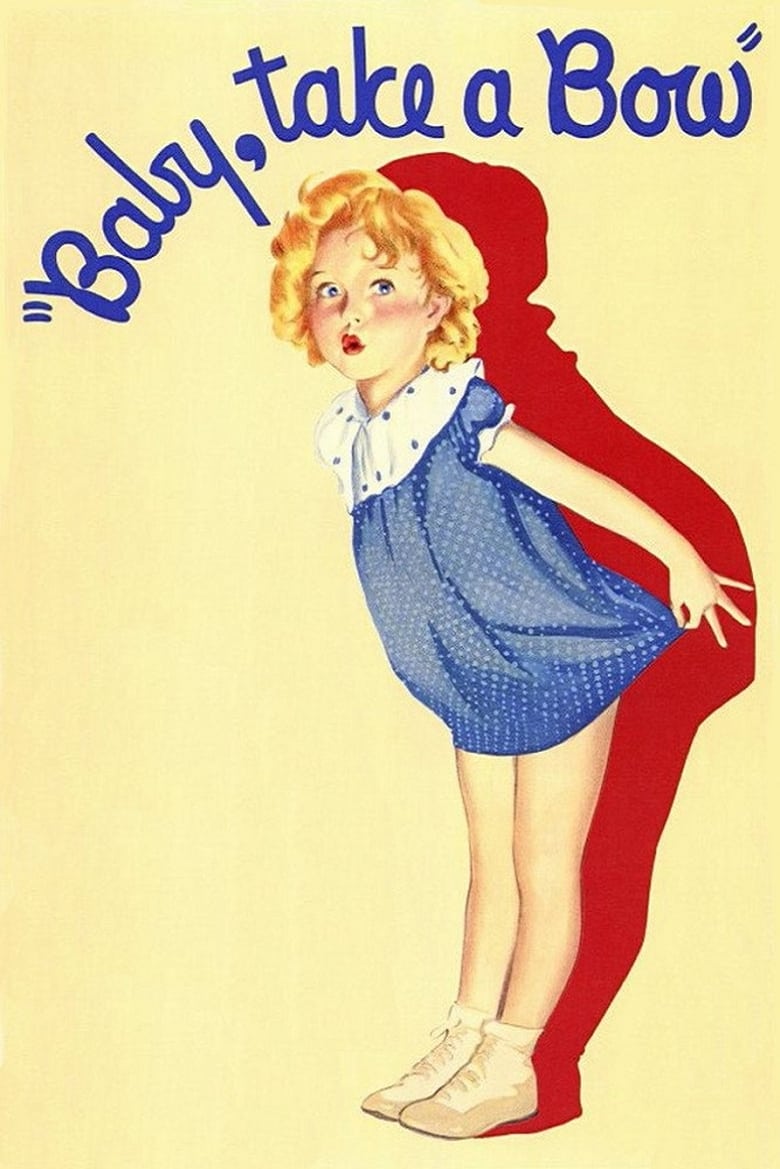
Baby Take a Bow
1934
PGDirector
Harry Lachman
Runtime
76 minutes
Average Rating
No ratings yetSynopsis
Eddie Ellison is an ex-con who spent time in Sing-Sing prison. Kay marries him as soon as he serves his time. Five years later, Eddie and his ex-convict buddy Larry, have both gone straight, and Eddie and Kay have a beautiful little girl named Shirley. However, Welch has kept a close eye on them for years. He believes in "once a criminal, always a criminal." Then, when Eddie's employer's wife's pearls go missing, it comes out that Eddie and Larry both spent time in prison, and they're fired. Welch suspects that Eddie and Larry have something to do with the theft of the pearls. Will Welch prove that Eddie and Larry had something to do with the theft, or will the truth prevail?
Where to Watch
Diversity & Representation
Overall Score
Minimal
Category Breakdown
LGBTQ+ Representation
The film follows a standard heteronormative romantic structure. There is no evidence of non-cisnormative gender identities or same-sex intimacy.
Gender Representation
Female characters like Alice Faye occupy central roles, but their agency is defined by romance and domesticity. The story focuses on male redemption and family stability.
Racial & Ethnic Diversity
The cast appears homogeneous, lacking non-white majority ensembles. The narrative focuses on specific socioeconomic classes rather than intersectional racial depth.
Religious & Cultural Diversity
The plot reinforces the sanctity of the nuclear family and social reintegration. It functions as a moral drama regarding reputation and respectability.
Disability Representation
There is no evidence of characters with visible or invisible disabilities. The narrative does not engage with neurodivergence or physical disability.
Strengths
- The film provides a clear moral narrative regarding individual reform and social reintegration.
- Central female characters occupy significant space within the musical and theatrical elements of the story.
Areas for Improvement
- The film lacks any representation of LGBTQ+ identities or non-cisnormative gender expressions.
- There is a notable absence of racial diversity or intersectional perspectives within the cast.
- The narrative does not include characters with disabilities or engage with neurodivergent themes.
AI Analysis
Baby Take a Bow is a product of the 1930s studio system, prioritizing conventional moral arcs and traditional social hierarchies. The story centers on the redemption of an ex-convict and the preservation of the nuclear family, adhering strictly to the era's heteronormative and social norms. Representation is minimal, with the film focusing on a homogeneous cast and traditional gender roles. While female characters are central to the musical elements, their roles remain tied to domestic stability and romantic pursuits rather than independent agency. The film lacks engagement with queer identities, racial diversity, or disability. It serves as a moral drama about character and reputation within an established, traditionalist social order.
Rate this Movie
Reviews
No reviews yet. Be the first to share your thoughts on this movie!
Use the rating form above to leave a star rating and optional review.