Find another title
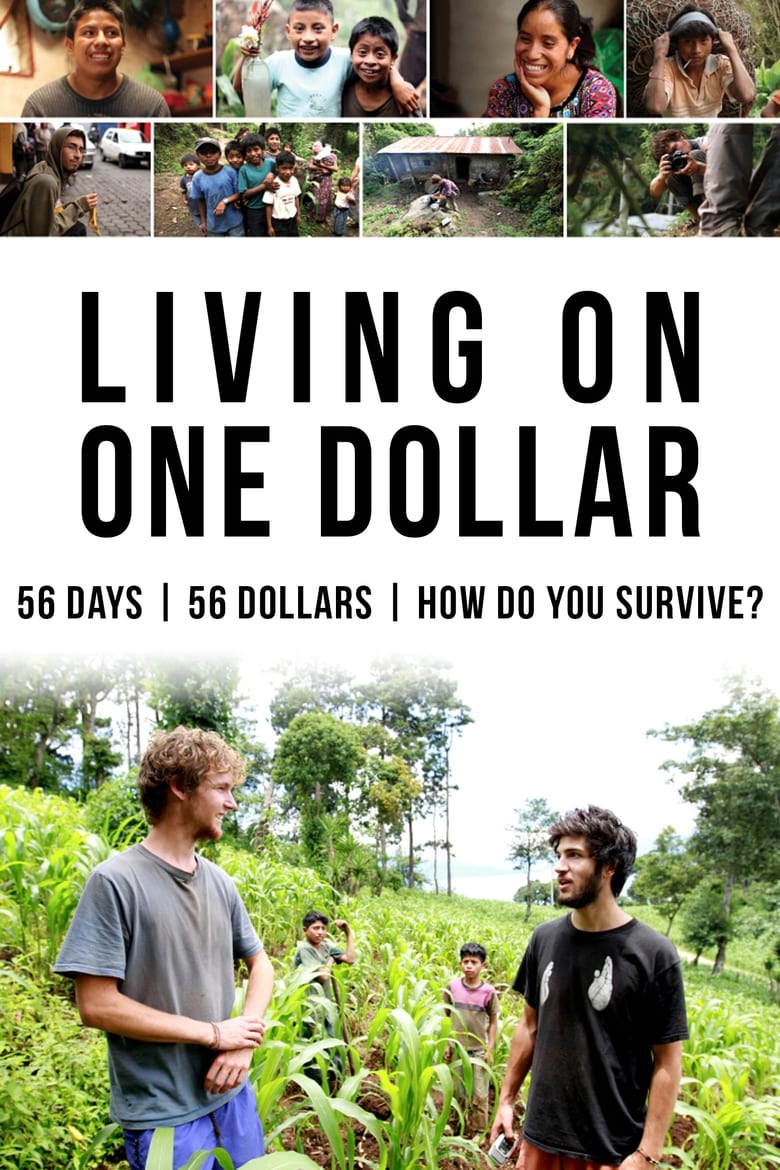
Living on One Dollar
2013
NRDirector
Sean Leonard, Chris Temple, Zach Ingrasci
Runtime
56 minutes
Average Rating
No ratings yetSynopsis
How do 1.1 billion people around the world live on less than one dollar a day? Four young friends set out to research and live this reality. Armed with only a video camera and a desire to understand, they spend just 56 dollars each for 56 days in rural Pena Blanca, Guatemala. They battle E.Coli, financial stress, and the realization that there are no easy answers. Yet, the generosity and strength of their neighbors, Rosa, Anthony and Chino gives them resilient hope. They return home transformed and embark on a mission to share their new found understanding with other students, inspiring and challenging their generation to make a difference.
Where to Watch
Diversity & Representation
Overall Score
Fair
Category Breakdown
LGBTQ+ Representation
The film does not center on LGBTQ+ identities or non-cisnormative expressions. The narrative focuses on the immediate survival realities of rural Guatemala.
Gender Representation
The documentary observes gendered labor and the domestic pressures placed on women in impoverished settings. It documents existing social structures without explicitly seeking to subvert them.
Racial & Ethnic Diversity
The film excels by centering the lived experiences of the Guatemalan people. Local community members like Rosa, Anthony, and Chino hold the narrative agency.
Religious & Cultural Diversity
The story provides a critique of global capitalist structures and systemic economic failures. It emphasizes communal strength and resilience over individualistic achievement.
Disability Representation
Physical vulnerabilities, such as E. coli and malnutrition, are shown as consequences of poverty. The film does not intentionally explore neurodivergence or permanent disability.
Strengths
- Disrupts the 'savior' trope by centering the agency of local Guatemalan community members.
- Offers a profound critique of global capitalist structures and systemic economic inequality.
- Provides a raw, authentic look at the lived experiences and resilience of non-Western populations.
Areas for Improvement
- Lacks representation or exploration of LGBTQ+ identities and non-cisnormative gender expressions.
- Does not intentionally address neurodivergence or permanent disability within the narrative.
- Gender representation remains observational of existing social hierarchies rather than deconstructing them.
AI Analysis
Living on One Dollar succeeds in disrupting the traditional 'savior' trope by placing Western protagonists in positions of economic dependency. The narrative shifts agency to the local Guatemalan community, providing a powerful critique of global wealth disparity and systemic poverty. However, the film's diversity is uneven. While it excels in racial and cultural representation through its anti-capitalist lens, it lacks intentionality regarding LGBTQ+ identities and neurodivergence. The gender representation is observational rather than transformative. Ultimately, the documentary is a strong piece of socially conscious non-fiction that prioritizes the resilience of the local community over the perspectives of the Western travelers.
Rate this Movie
Reviews
No reviews yet. Be the first to share your thoughts on this movie!
Use the rating form above to leave a star rating and optional review.