Date with an Angel
1987
No user ratings available yet
Diversity score: 1.7 out of 10

1996
Not RatedDirector
Tomoaki Hosoyama
Runtime
85 minutes
Average Rating
No ratings yetSynopsis
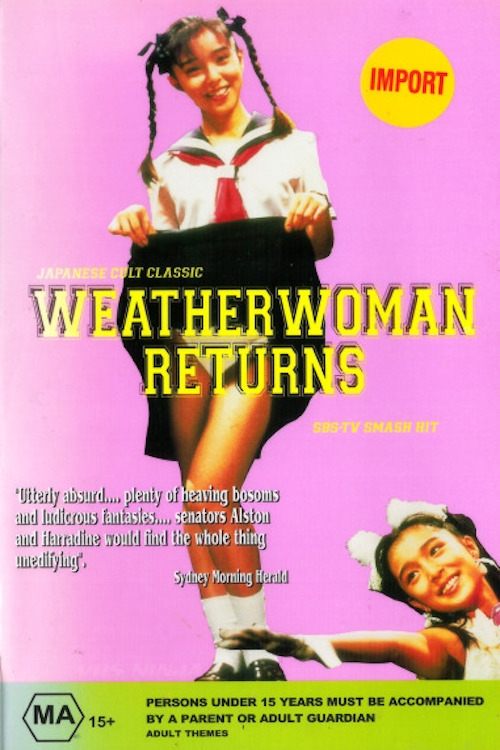
Keiko, a young, newly hired weather woman, is eager to give her channel's flagging ratings a boost. She decides a panty shot might do the trick, so during her forecast she lifts her skirt, thereby capturing the attention and the hearts of viewers. Keiko's stunt creates such a stir of excitement over the weather report that viewers begin religiously turning in to see what she'll do next. However, this showboating routine earns the ire of Kaori, the beautiful and ambitious daughter of JTV's chairman. Jealous of her success and aching to take over the weather report, Kaori is willing to do just about anything to get what she wants.
Overall Score
Limited
Category Breakdown
LGBTQ+ Representation
The film lacks any discernible engagement with queer narratives or non-cisnormative identities. The central conflict remains strictly within a traditional heteronormative framework.
Gender Representation
While the story centers on female characters, their agency is tied to sexualized performance and the male gaze. The rivalry between Keiko and Kaori reinforces conventional archetypes rather than subverting gender hierarchies.
Racial & Ethnic Diversity
As a localized Japanese production, the film presents a homogeneous demographic. There is no evidence of racial blending or diverse casting within the narrative.
Religious & Cultural Diversity
The plot operates within a standard capitalist media framework focused on ratings and corporate success. It offers no critique of social institutions or secularist themes.
Disability Representation
There is no mention of characters with physical, sensory, or neurodivergent disabilities. The film does not engage with disability agency or related tropes.
Strengths
Areas for Improvement
AI Analysis
Weather Woman is a genre comedy that prioritizes spectacle and situational tropes over progressive thematic development. The narrative relies on established commercial storytelling patterns of the late 90s, focusing on interpersonal rivalry and sexualized stunts to drive the plot. The film fails to disrupt social hierarchies, instead utilizing a binary competitive framework between its female leads. This approach reinforces traditional character archetypes rather than offering meaningful intersectional representation. Ultimately, the production functions as a localized comedy that lacks intentionality regarding diversity, adhering to a homogeneous cultural and social backdrop.
No reviews yet. Be the first to share your thoughts on this movie!
Use the rating form above to leave a star rating and optional review.