Find another title
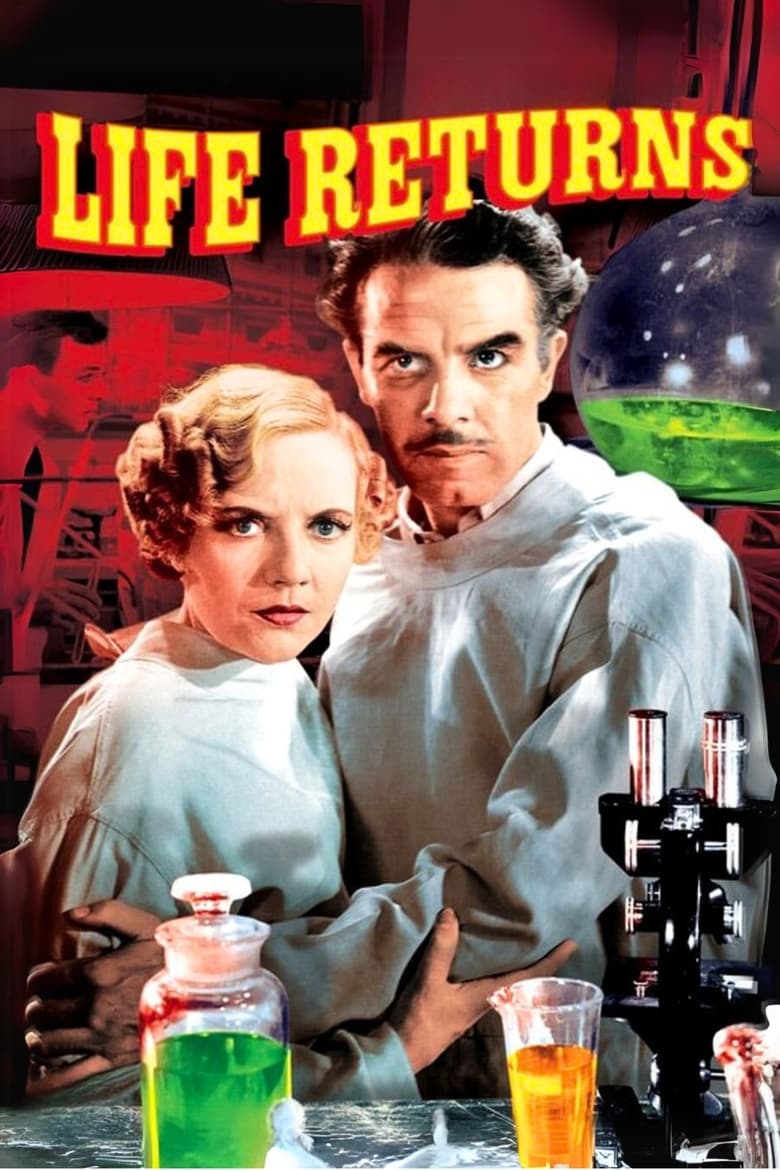
Life Returns
1935
PassedDirector
James P. Hogan, Eugene Frenke
Runtime
63 minutes
Average Rating
No ratings yetSynopsis
A doctor who has spent his career working on ways to revive the dead sees his chance to prove his theory by performing his procedures on a recently deceased dog.
Where to Watch
Diversity & Representation
Overall Score
Limited
Category Breakdown
LGBTQ+ Representation
The film lacks any evidence of non-heteronormative identities. The narrative focuses entirely on a clinical scientific premise involving a doctor and an animal.
Gender Representation
The story centers on a doctor, a role traditionally coded as male in 1930s cinema. There is no indication of female agency or subversion of gender hierarchies.
Racial & Ethnic Diversity
The synopsis does not suggest a diverse cast or non-Anglo-Saxon characters. It likely reflects the homogeneous casting standards common in 1935.
Religious & Cultural Diversity
The film explores scientific ethics and the boundaries of life. This pursuit of progress aligns with traditional Western notions of individual merit and scientific advancement.
Disability Representation
There is no information regarding the depiction of physical or neurodivergent characters. The focus remains strictly on the biological process of reanimation.
Strengths
- Explores complex themes regarding scientific ethics and the boundaries between life and death.
Areas for Improvement
- Lacks intersectional complexity and fails to engage with diverse social identities or systemic critiques.
- Adheres to traditional 1930s archetypes, offering little representation of gender or racial diversity.
AI Analysis
Life Returns is a genre-bending science fiction drama that prioritizes a singular scientific pursuit over social complexity. The narrative is localized on a doctor's experimentation with reanimation via a canine subject, leaving little room for broader social themes. Because the film focuses on a clinical premise, it lacks the intersectional depth or intentional disruption of social hierarchies seen in more progressive works. It functions as a standard genre piece of the mid-1930s, adhering to the era's conventional archetypes. Ultimately, the film's scope is narrow, centering on scientific curiosity rather than systemic critique or diverse representation.
Rate this Movie
Reviews
No reviews yet. Be the first to share your thoughts on this movie!
Use the rating form above to leave a star rating and optional review.