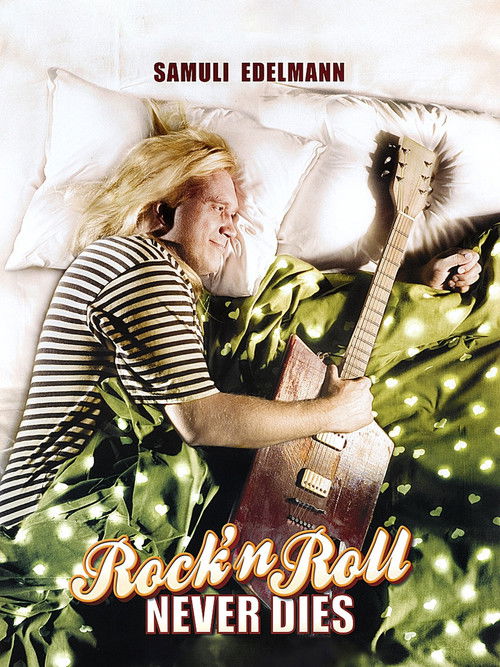
Rock'n Roll Never Dies
2006
No user ratings available yet
Representation score: 3.1 out of 10
Representation Score
Fair
1984
Director
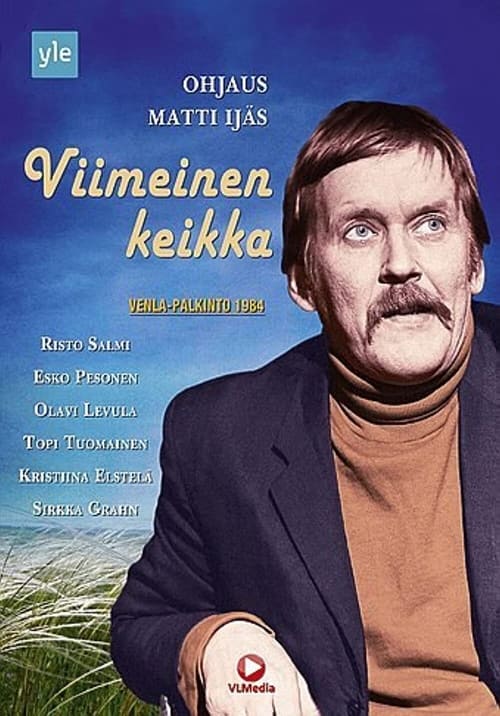
Matti Ijäs
Average Rating
No ratings yetNew Showbiz Analysis
Viimeinen keikka is a period-specific character study that mirrors the social and demographic realities of 1980s Finnish television. The narrative structure prioritizes traditional social structures and homogeneous casting, focusing on the shared history of a male musical ensemble. The film adheres to the cinematic standards of its era, offering a conventional look at communal mourning and social rites. It lacks the intentional disruption of clichés or the multi-layered representation seen in modern productions. Ultimately, the work functions as a reflection of its time, emphasizing established social hierarchies rather than challenging them through diverse representation.
Category Breakdown
The film does not include any clear evidence of queer narratives or non-straight relationships. It centers on a male-centric social circle of musicians.
The story revolves around a male-dominated social circle of bandmates. While female performers are part of the cast, the main roles remain dominated by men.
The production reflects the demographic norms of 1980s Northern Europe. The cast appears ethnically uniform with no indication of racial diversity.
The story explores traditional social customs through communal mourning. It operates within the conventional moral and institutional frameworks of its time.
There is no visible portrayal of neurodivergence or physical disabilities. Characters with disabilities do not appear to have significant control over their situations within the narrative.
Present on Screen
Limited or Absent
Official Synopsis
After the death of an old bandmate, the surviving musicians head to the funeral.
2006

1982
2004

2018

2016

2008

2013
1999
No reviews yet. Be the first to share your thoughts on this movie!
Use the rating form above to leave a star rating and optional review.