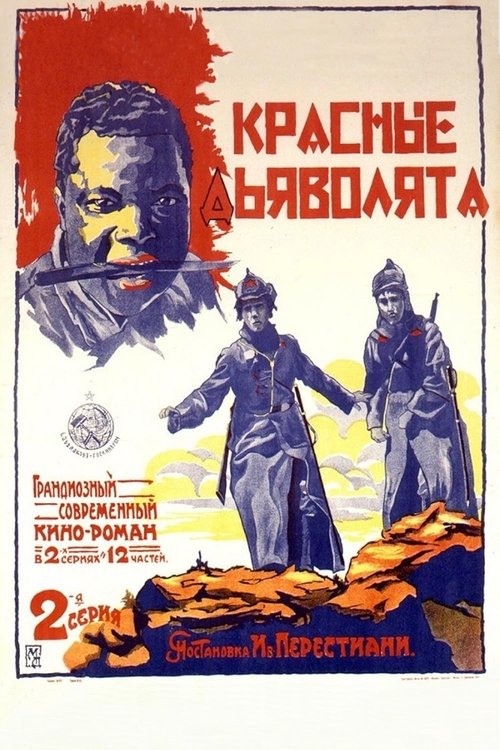
Red Devils
1923
No user ratings available yet
Diversity score: 6.0 out of 10

1981
Director
Samvel Gasparov
Runtime
67 minutes
Average Rating
No ratings yetSynopsis
The Civil War. A foster home teacher is delivering grain for the starving children. Her accidental co-travelers are Chekist Gorbach, sailor Sasha, and stationmaster Zaytsev, who came into possession of three gold nuggets. And around them are the Reds, the Whites and the bandits.
Overall Score
Fair
Category Breakdown
LGBTQ+ Representation
The film focuses on the socio-political conflicts of the Civil War era. There is no evidence of LGBTQ+ characters or narratives addressing non-cisnormative identities.
Gender Representation
A female teacher serves as the narrative's ethical compass, providing moral agency. This contrasts with the male characters who occupy traditional archetypes of security, labor, and authority.
Racial & Ethnic Diversity
The cast likely reflects the regional ethnic complexities of the Russian Civil War era. However, there is no explicit evidence of intersectional or diverse casting.
Religious & Cultural Diversity
The story prioritizes collective survival and social welfare over individualist greed. It critiques resource hoarding by focusing on the delivery of grain to starving children.
Disability Representation
There is no documented evidence regarding the portrayal of physical or neurodivergent disabilities in this work.
Strengths
Areas for Improvement
AI Analysis
Samvel Gasparov’s historical adventure explores the friction between communal necessity and individual greed during the Russian Civil War. The film uses a journey trope to examine how characters navigate a landscape of scarcity and shifting political allegiances. The narrative finds its strength in its moral centering. By placing a female teacher at the heart of the mission to feed starving children, the film subverts purely combat-oriented roles, using her to drive the plot's ethical impetus. While the film lacks contemporary identity-based representation, it offers a critique of systemic collapse. It weighs the survival of the collective against the chaotic, self-serving motivations of the male travelers.
No reviews yet. Be the first to share your thoughts on this movie!
Use the rating form above to leave a star rating and optional review.