The Virgin Psychics
2015
No user ratings available yet
Representation score: 7.7 out of 10
Representation Score
Fair
2007
Director
Quentin Dupieux
Runtime
80 minutes
Average Rating
No ratings yetNew Showbiz Analysis
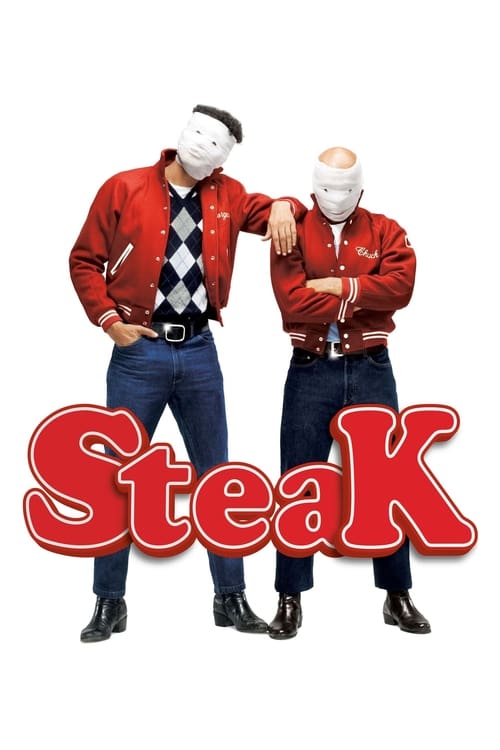
Steak is an absurdist character study that prioritizes stylistic subversion over demographic breadth. While it successfully deconstructs social norms and tribalism through its surrealist lens, it remains a narrow narrative. The film's strength lies in its critique of established societal structures and its rejection of traditional moral clarity. It uses the Chivers gang to explore the absurdity of social cohesion. However, the work lacks depth in representing multiple aspects of identity. The social environment feels homogeneous, and the narrative space is heavily dominated by masculine-centric dynamics and a lack of diverse identity representation.
Category Breakdown
The film does not explicitly depict LGBTQ+ identities or romantic orientations. The narrative focuses on the fractured friendship between George and Blaise without addressing sexual orientation.
The story centers on a male-dominated social ecosystem, particularly the Chivers gang and the conflict between two male protagonists. There are no female characters who play a significant role in driving the story.
The narrative operates within a standard Western social framework. There is no evidence of a multi-ethnic cast or diverse racial representation within the provided context.
The film excels at cultural subversion by critiquing social cohesion through the surreal rituals of the Chivers gang. It uses surrealism to deconstruct traditional societal structures and order.
Themes of mental health and institutionalization are introduced through a character's time in a psychiatric hospital. However, it is unclear if the portrayal offers nuanced ability to act or serves as a plot device.
Present on Screen
Limited or Absent
Official Synopsis
George is the scapegoat of his classmates. One day he cracks and shoots them. His best and only friend Blaise is accused in his place and sentenced to 7 years in a psychiatric hospital. At the day of his release, Blaise realizes he only has one family: his best friend George. But he does not want to hear about his childhood friend, as he tries to integrate with the “Chivers” a gang whose members wear red jackets and boots, drink milk, drive sport trucks and play an incomprehensible and violent game that mixes cricket and mental arithmetic.
2015
1981

2005

1997
2008

2021
2007

1993
No reviews yet. Be the first to share your thoughts on this movie!
Use the rating form above to leave a star rating and optional review.