
Fight for Tomorrow
2025
No user ratings available yet
Representation score: 2.4 out of 10
Representation Score
Fair
2025
Director
Joe Chan
Runtime
92 minutes
Average Rating
No ratings yetNew Showbiz Analysis
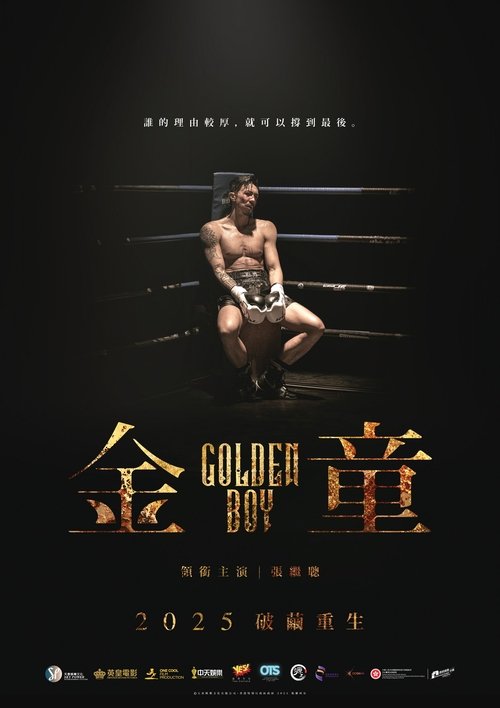
Golden Boy opens on the physicality of a man rebuilding his life after a decade of absence, selling a vision of masculine redemption through labor and paternal duty. The film’s argument is that personal responsibility and traditional family bonds are the only valid paths to societal reintegration. Cheung Lek’s journey from prisoner to father to boxer frames his past mistakes as a personal failing, not a systemic one, and his return to the ring as a moral victory. The camera loves the sweat and the father-son reconciliation, treating the boxing ring as a space where masculine honor is restored. However, the film’s internal logic is constrained by its reliance on female characters as emotional props; Queenie and Carrie exist to validate Cheung’s worth, not to pursue their own lives. The last image, likely a victorious or reconciliatory moment, settles the film’s values: individual grit and traditional family structures are the cure for social dislocation. It is a straightforward, culturally specific drama that affirms conventional hierarchies of gender and family without challenging them.
Category Breakdown
No queer characters or same-sex intimacy appear. The narrative relies exclusively on heterosexual family dynamics and male redemption arcs.
Women function as emotional anchors or inheritance triggers. Queenie and Carrie exist primarily to motivate the male protagonist’s journey and validate his worth.
The cast is predominantly Chinese, reflecting the cultural setting without exoticization. Ethnic identity is treated as the unmarked, authentic norm rather than a tokenistic element.
Traditional values of fatherhood and earned wealth through labor form the moral core. Personal responsibility and individual family duty are framed as the path to societal reintegration.
No characters with physical, sensory, or cognitive disabilities are depicted. Injuries are treated as temporary physical obstacles to athletic performance, not as ongoing identities.
Present on Screen
Limited or Absent
Official Synopsis
A decade ago, Cheung Lek was the brightest rising boxing star—known as “Golden Boy”—until a tragic incident stripped him of his freedom. Ten years later, released from prison, he comes face to face with Fong Yuen, the son he has never met. To claim the inheritance left by Fong Yuen’s mother, Cheung must learn to live with and take care of the boy. Thrust into fatherhood and confronted by past regrets, Cheung’s life is turned upside down once more. Through conflict and gradual reconciliation with his son, he begins to understand his true purpose. Confronting the ghosts of his past, Cheung decides to return to the ring—not only to reclaim his dream, but to become the role model his son deserves.
2025

2013

2024

2004

2024

1979

2005

2021
No reviews yet. Be the first to share your thoughts on this movie!
Use the rating form above to leave a star rating and optional review.