Find another title
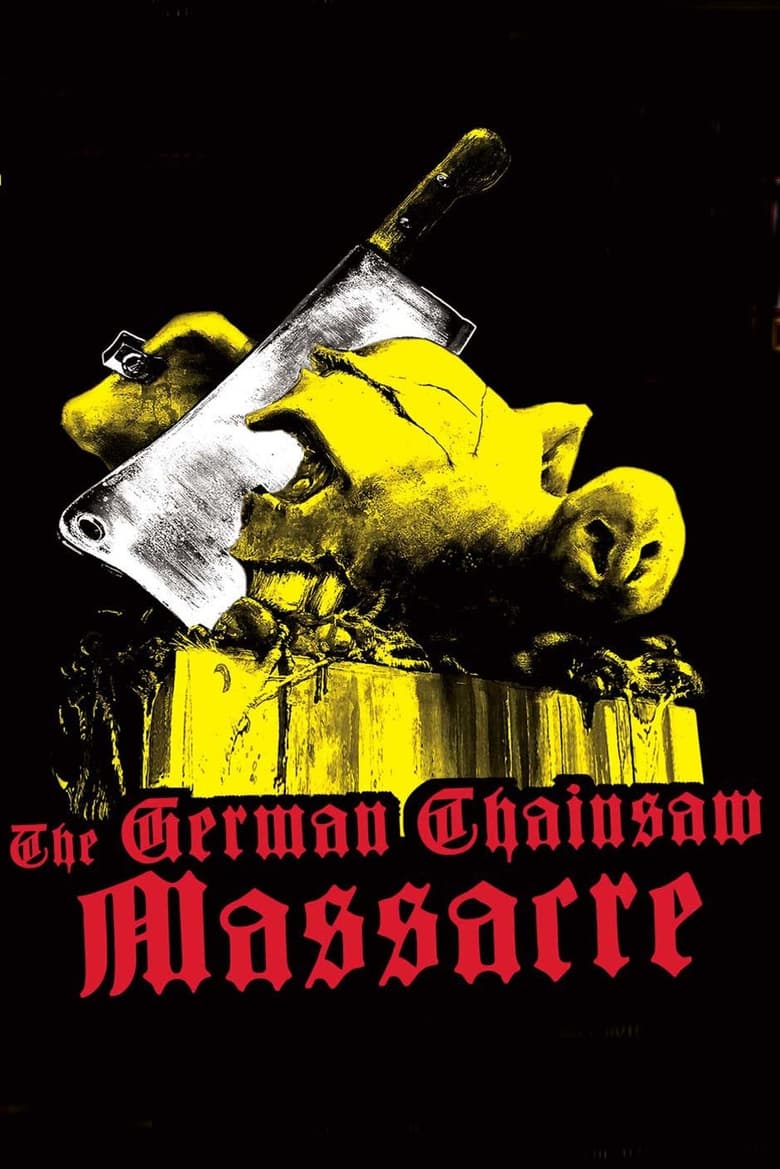
The German Chainsaw Massacre
1990
Not RatedDirector
Christoph Schlingensief
Runtime
63 minutes
Average Rating
No ratings yetSynopsis
Taking place around the German reunification of 1990, a group of East Germans cross the border to visit West Germany and get slaughtered by a psychopathic cannibal family who want to turn them into sausages.
Where to Watch
Diversity & Representation
Overall Score
Fair
Category Breakdown
LGBTQ+ Representation
The film lacks explicit LGBTQ+ characters or non-heteronormative narratives. While the transgressive style might bypass traditional storytelling, there is no visible representation in the primary plot.
Gender Representation
The narrative focuses on survival dynamics rather than domestic roles. Schlingensief’s style suggests a disruption of traditional masculine leadership in favor of fractured, farcical power depictions.
Racial & Ethnic Diversity
The story centers on the East and West German dichotomy. It uses cannibalism as a metaphor for one identity consuming another, though it remains focused on a European demographic.
Religious & Cultural Diversity
The film offers a sophisticated critique of national institutions. It disrupts Western myths of reunification by portraying the new state as a site of predatory violence and systemic corruption.
Disability Representation
There is no information regarding the inclusion or portrayal of characters with physical or neurodivergent disabilities.
Strengths
- Sophisticated critique of national identity and political structures.
- Effective use of dark comedy to challenge Western celebratory myths.
- Subversion of traditional social hierarchies and state stability.
Areas for Improvement
- Lack of explicit LGBTQ+ representation or non-heteronormative narratives.
- Limited racial and ethnic diversity beyond the German dichotomy.
- Absence of visible representation for characters with disabilities.
AI Analysis
The film functions as a dark, satirical commentary on the socio-political landscape of 1990 German reunification. It utilizes horror tropes to explore the friction between East and West German identities through a lens of systemic violence. While the work excels at deconstructing national identity and challenging celebratory political myths, it lacks intersectional depth. The narrative is heavily concentrated on a specific European demographic and geopolitical conflict. Ultimately, the film's strength lies in its subversion of social hierarchies rather than its breadth of diverse character representation.
Rate this Movie
Reviews
No reviews yet. Be the first to share your thoughts on this movie!
Use the rating form above to leave a star rating and optional review.