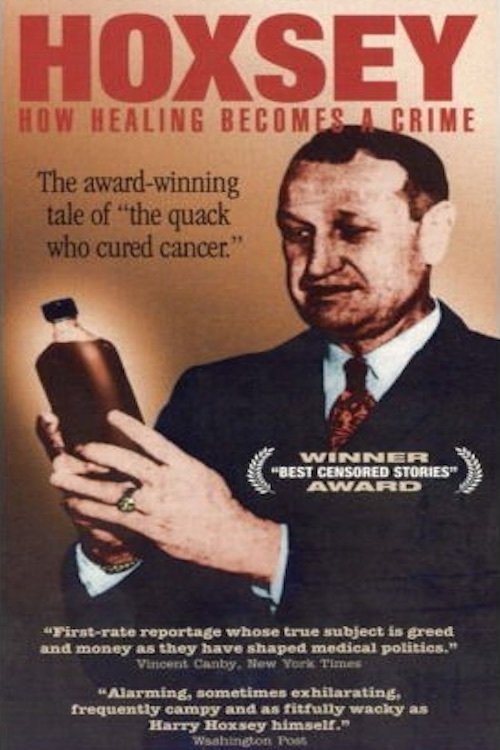
Hoxsey: When Healing Becomes a Crime
2005
No user ratings available yet
Representation score: 3.6 out of 10

Representation Score
Good
2004
GDirector
Steve Kroschel
Runtime
91 minutes
Average Rating
No ratings yetNew Showbiz Analysis
The Gerson Miracle centers underrepresented perspectives by focusing on Jewish identity and the ability to act of those battling chronic illness. By highlighting Dr. Max Gerson’s history and the testimonies of cancer survivors, the film challenges the traditional authority of Western medical institutions. However, the documentary is narrow in scope, lacking representation of LGBTQ+ identities and not exploring a broad range of gender dynamics beyond the central role of Charlotte Gerson. Ultimately, the film prioritizes the voices of those navigating systemic medical opposition and provides meaningful ability to act to individuals dealing with severe health challenges.
Category Breakdown
The film does not include explicit representations of LGBTQ+ characters or narratives. It focuses on medical history and individual biological struggles within a context that assumes everyone is straight or cisgender.
Charlotte Gerson plays a central role as the guardian of a medical legacy. This role challenges traditional male-dominated medical hierarchies, although broader gender dynamics are not explored further.
The documentary centers on the German-Jewish identity of Dr. Max Gerson. This provides significant representation by placing a non-Anglo-Saxon figure in a position of medical authority.
The narrative critiques the Western medical establishment as an oppositional force. It prioritizes specialized, non-traditional knowledge over mainstream institutional consensus and systemic status quo.
Patients facing life-threatening cancers have significant narrative authority. Their testimonies drive the film, presenting them as active agents in their recovery rather than passive subjects.
Present on Screen
Limited or Absent
Official Synopsis
In 1928, Dr. Max Gerson, a German-Jewish researcher, stumbled upon a therapy that has cured tens of thousands of people worldwide since then, including patients's previously thought incurable by their doctors. For the first time, this film chronicles the epic true story of Gerson's miracle. A cure for cancer and most other chronic and degenerative diseases has been available since 1928. The therapy was developed by Max Gerson, MD, a German Jewish physician, hailed by Nobel Laureate Albert Schweitzer as, “the most brilliant medical genius ever.” Nine Gerson patients relate stories of recovery from the most deadly cancers (liver, ovarian, pancreatic) up to nineteen years ago. Their inspiring testimonies are powerful evidence of the Therapy’s effectiveness. Charlotte Gerson also describes her lifelong efforts to keep the Therapy alive despite powerful opposition.
2005
2016
2016

2023
2010
2010
2019
1992
No reviews yet. Be the first to share your thoughts on this movie!
Use the rating form above to leave a star rating and optional review.