Redone
2017
No user ratings available yet
Representation score: 1.7 out of 10
Representation Score
Limited
2018
TV-MADirector
David James Armsby
Runtime
5 minutes
Average Rating
No ratings yetNew Showbiz Analysis
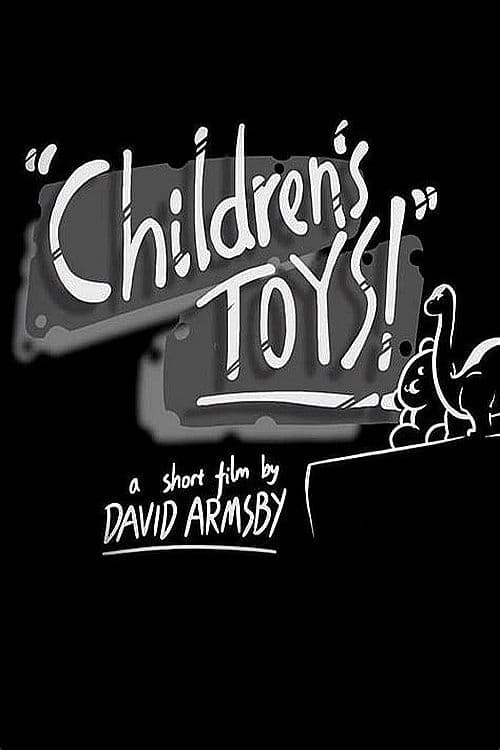
The film opens with a sterile, flat-color animation that establishes a corporate, dystopian aesthetic, immediately signaling that individuality is a design flaw to be corrected. David James Armsby’s *Children's Toys* (2018) sells a vision of collective harmony where the "Great Mother" (Adrienne Cox) dissolves the boundaries of the self into a unified "Hive." The sold meaning is clear: the traditional nuclear family and Western meritocracy are burdensome cages, and the only escape is submission to a benevolent, maternal authority. The camera loves the "Great Mother’s" melodic, commanding voice, treating her sermons on unity as the film’s moral spine, while the "Mayor" and "Handymen" are reduced to flat, efficient tools who never question their function. The film’s argument is that individual identity is a problem solved by collective management. The "Children's Toy" is the passive consumer who is "fixed" by the Hive, and the "Mrs. Robinson" character embodies the weary domesticity that the collective alleviates. There is no irony here; the film is sincere in its praise of the Hive as a secular religion that replaces the flawed individual with the perfect whole. The ending rewards the maintenance of order over the chaos of individuality, leaving the "Great Mother" as the sole source of meaning in a pristine, empty landscape. This short film inverts traditional Western defaults by positioning female authority as the natural, moral center and male function as the compliant mechanism. The "Great Mother" never pays for the suppression of individuality; she maintains her rank and the final word, framing her control as a gift. The film’s internal logic is consistent: if the individual is a burden, then the Hive is the cure. The last image is the moral verdict: a world where the self is dissolved, and the collective is the only true home.
Category Breakdown
No romantic pairings or queer-coded characters appear. Relationships remain strictly hierarchical, moving from Mother to Child or Mayor to Handymen. The collective structure leaves no room for personal identity or deviation.
Adrienne Cox voices the Great Mother, the moral center who delivers the final word. David James Armsby voices the Mayor and Handymen, reducing men to functional instruments. Male characters serve as compliant tools for female authority.
Minimalist animation and voice-only casting contain no racial coding or ethnic markers. The Hive is depicted as a universal, colorless entity. No specific cultural or racial identity is assigned to any character.
The film treats the nuclear family and Western individualism as insufficient. It replaces them with a collective Hive where the Great Mother acts as a secular deity. Conformity is framed as the enlightened moral endpoint.
No characters display physical or cognitive impairments. The Children's Toys represent passive consumerism rather than disability. No impairment is depicted, mocked, or treated as a moral lesson within the narrative.
Present on Screen
Limited or Absent
Official Synopsis
The third installment in David James Armsby’s dystopia short film series.
2017
2003
2020
1995
2018

2010
2021

2012
No reviews yet. Be the first to share your thoughts on this movie!
Use the rating form above to leave a star rating and optional review.