Find another title
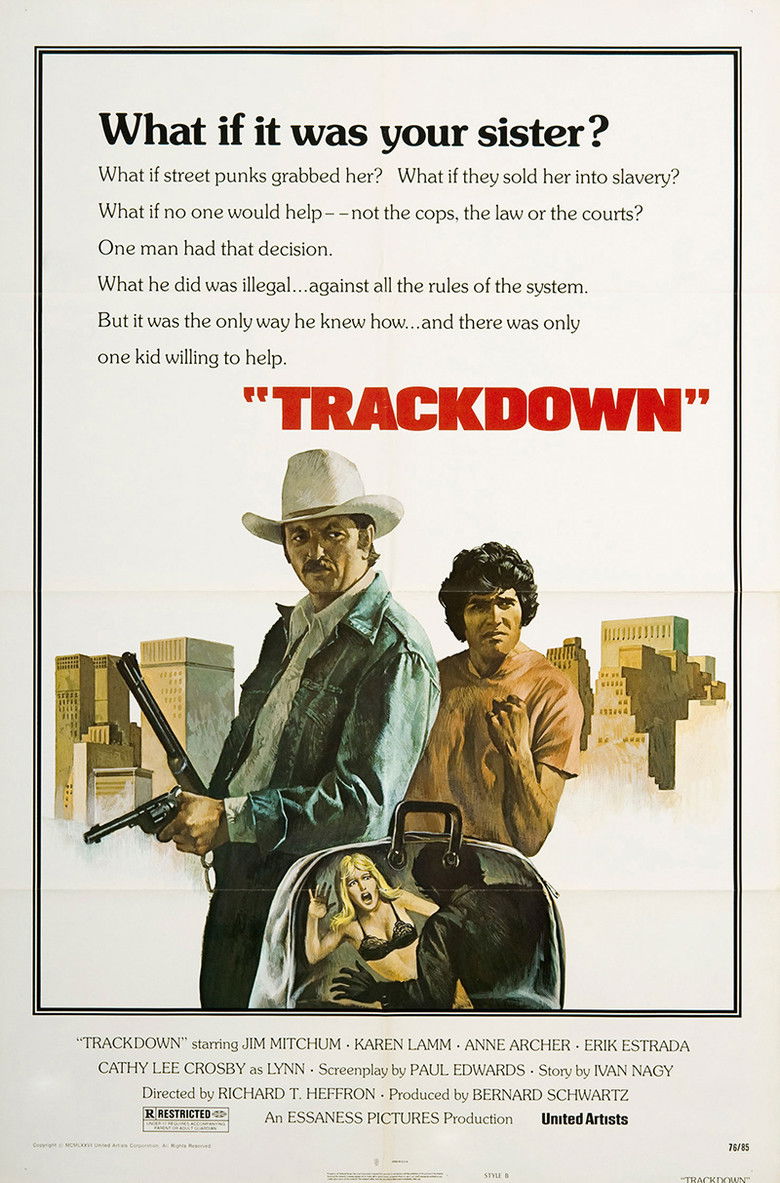
Trackdown
1976
RDirector
Richard T. Heffron
Runtime
98 minutes
Average Rating
No ratings yetSynopsis
When his sister Betsy packs up and leaves the family's Montana cattle ranch to find fame and fortune in Hollywood, her brother Jim decides to follow after her to make sure she doesn't get into trouble.
Where to Watch
Diversity & Representation
Overall Score
Limited
Category Breakdown
LGBTQ+ Representation
The film focuses on familial bonds and traditional success. There is no evidence of non-cisnormative identities or critiques of heteronormativity within the narrative.
Gender Representation
Betsy shows agency by leaving the ranch for Hollywood, but the plot is driven by Jim's protective intervention. This creates a dynamic where male agency stabilizes female ambition.
Racial & Ethnic Diversity
The film appears to reflect the homogeneous social structures typical of the Western genre. It lacks evidence of a non-Anglo-Saxon majority cast.
Religious & Cultural Diversity
The story centers on traditional values of kinship and ranch life. It utilizes classic Western tropes without prioritizing secularism or critiquing Western institutions.
Disability Representation
There is no information regarding the inclusion or portrayal of characters with physical or neurodivergent disabilities.
Strengths
- The female character, Betsy, demonstrates agency through her decision to pursue a career in Hollywood.
Areas for Improvement
- The narrative relies on traditional gender dynamics where male intervention drives the plot.
- The film lacks racial and ethnic diversity, reflecting a homogeneous social structure.
- There is a lack of LGBTQ+ representation or non-cisnormative identities.
AI Analysis
Trackdown is a conventional 1970s Western that prioritizes established genre tropes over narrative subversion. The story follows a brother's journey to protect his sister, reinforcing traditional social hierarchies and familial structures. The film relies on standard period-typical archetypes, offering little intersectional complexity. While the female lead displays personal ambition, the narrative momentum remains tethered to a male protagonist's protective role. Ultimately, the work functions as a traditional genre piece. It adheres to the homogeneous social structures and cultural norms common to the Western era rather than challenging them.
Rate this Movie
Reviews
No reviews yet. Be the first to share your thoughts on this movie!
Use the rating form above to leave a star rating and optional review.