
The Dove
1974
No user ratings available yet
Representation score: 0.4 out of 10
Representation Score
Fair
1973
PGDirector
John Erman
Runtime
89 minutes
Average Rating
No ratings yetNew Showbiz Analysis
The film's strength lies in its psychological exploration of the family unit rather than in demographic diversity. It avoids the typical 'capable patriarch' cliché, presenting a reversed dynamic where the child serves as the moral guide. While the narrative provides a nuanced look at domestic dysfunction and emotional instability, it lacks depth in representing different racial or sexual identities. The setting and character focus remain largely homogeneous, offering limited representation of diverse backgrounds. Ultimately, the film functions as a character study that challenges mid-century ideals of masculinity and stability, even if it stays within traditional social frameworks.
Category Breakdown
The film focuses on a father-son relationship that assumes everyone is straight and cisgender. There are no characters with LGBTQ identities or non-binary gender expressions.
The story challenges traditional gender roles by showing the father as emotionally immature and the son as wise and caring. However, there is little representation of women's roles or ability to act.
Set in 1920s rural Kansas, the film depicts a homogeneous community with no characters from diverse racial or ethnic backgrounds.
The film critiques traditional American culture by showing a dysfunctional family unit. It avoids the typical wholesome family clichés, focusing instead on a father who fails to provide stability and a child burdened by grief.
There are no explicit mentions of physical disabilities. The protagonist exhibits significant emotional issues and psychological immaturity, but the exact purpose of this characterization is unclear.
Present on Screen
Limited or Absent
Official Synopsis
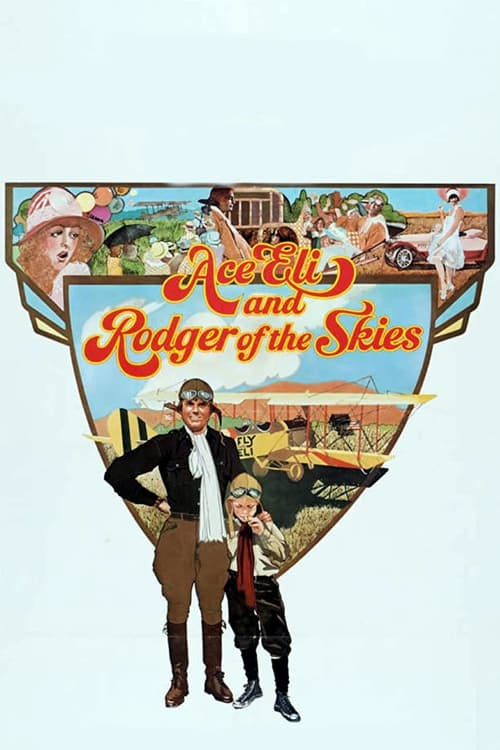
The story of Ace Eli Walford, a 1920s stunt flyer who barnstorms around the country, taking his eleven-year-old son Rodger with him as he goes from town to town. The place is rural Kansas, and the time is midsummer in the early nineteen-twenties, not long after World War I. Eli (Cliff Robertson), a barn storming pilot who has the emotional make-up of an 11-year-old, and Rodger (Eric Shea), his 11-year-old son who possesses the wisdom of the ancients, set off to see the world, which means flying all the way to San Willow. To Eli, San Willow seems to be as fabled as Xanadu and quite as remote. In essence, "Ace Eli and Rodger of the Skies" is about the adventures of Rodger and Eli getting from nowhere to nowhere. Eli, a killer with the ladies at first, always leaves them unsatisfied. He seems to have a sex problem. Rodger spends a lot of his time getting his dad out of scrapes. He also drinks, smokes and goes to sleep at night crying for his deceased mom.
1974
1939
1985
1927
1975
1957

1974
1988
No reviews yet. Be the first to share your thoughts on this movie!
Use the rating form above to leave a star rating and optional review.