
I viaggiatori della sera
1979
No user ratings available yet
Representation score: 3.1 out of 10
Representation Score
Fair
1990
Director
Peter Vogel
Runtime
101 minutes
Average Rating
No ratings yetNew Showbiz Analysis
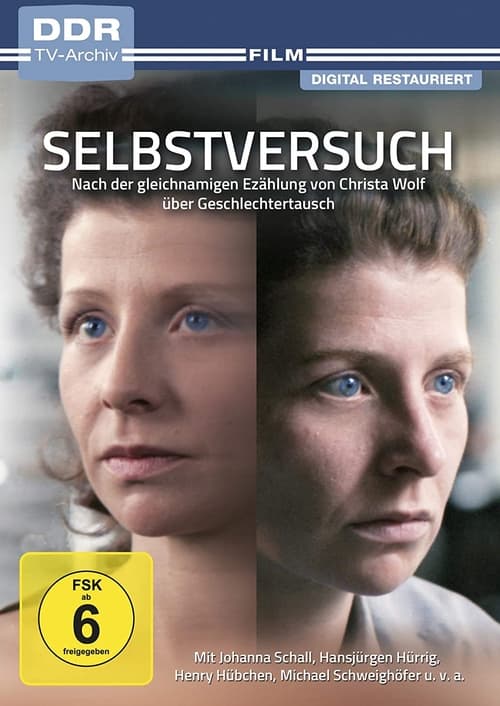
Selbstversuch is a character-driven science fiction drama that draws its strength from the intellectual depth of Christa Wolf's literature. It excels at centering women's ability to drive the story and questioning established social norms through a psychological lens. However, the film is constrained by its specific historical and regional origins. The East German context results in a lack of racial and ethnic diversity, and the narrative lacks overt LGBTQ+ visibility. Ultimately, the film is a study of individual consciousness that succeeds in gendered subjectivity but remains limited by the demographic homogeneity of its era.
Category Breakdown
The film explores the fluidity of identity through psychological experiments. While there are no direct depictions of same-sex relationships, the themes suggest a potential for challenging traditional identity norms.
The narrative centers on the protagonist's internal experiences and intellect, subverting traditional hierarchies by placing female intelligence above patriarchal or domestic structures.
Reflecting the demographic homogeneity of its East German context, the film lacks racial and ethnic diversity. There is no evidence of multi-ethnic casting or significant racial diversity.
The story engages in cultural subversion by prioritizing personal truth over institutional dogma. It uses the self-experiment motif to critique rigid systemic and social structures.
There is no evidence regarding the portrayal of physical or neurodivergent disabilities in this work.
Present on Screen
Limited or Absent
Official Synopsis
Johanna is a dedicated female scientist in a near-future world. Her research team develops a drug called "Petersein masculinum 199," capable of transforming a woman into a man. Driven by scientific curiosity and an unrequited love for her cold project leader, Professor Peters, Johanna volunteers as the first human test subject.The chemical process succeeds, and she becomes a man named Johann Anders. However, the physical triumph quickly turns into a psychological crisis. As Johann, she experiences the world from a male perspective and is shocked by what she finds. The men around her live in a world of emotional detachment, power struggles, and casual sexism.When Johann sees how the Professor emotionally mistreats his own daughter, the illusion shatters. Horrified by the lack of empathy required to thrive in this patriarchal society, Johann ends the experiment on day 29. She chooses to change back into a woman, rejecting the toxic male world.
1979

1989

2008

2006

1984

1958

1979

1985
No reviews yet. Be the first to share your thoughts on this movie!
Use the rating form above to leave a star rating and optional review.