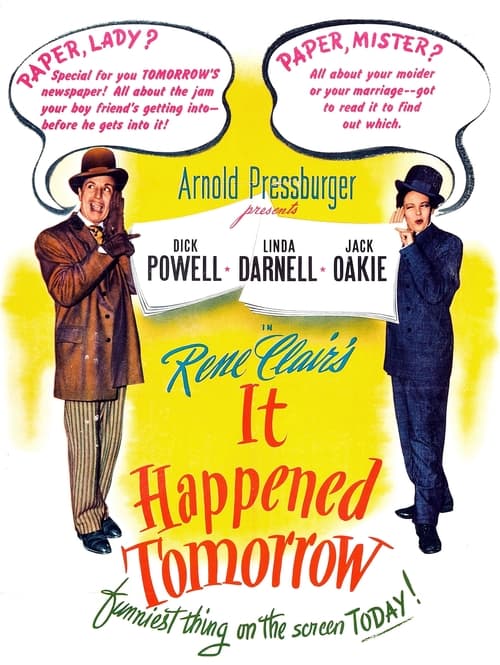
It Happened Tomorrow
1944
No user ratings available yet
Diversity score: 2.0 out of 10
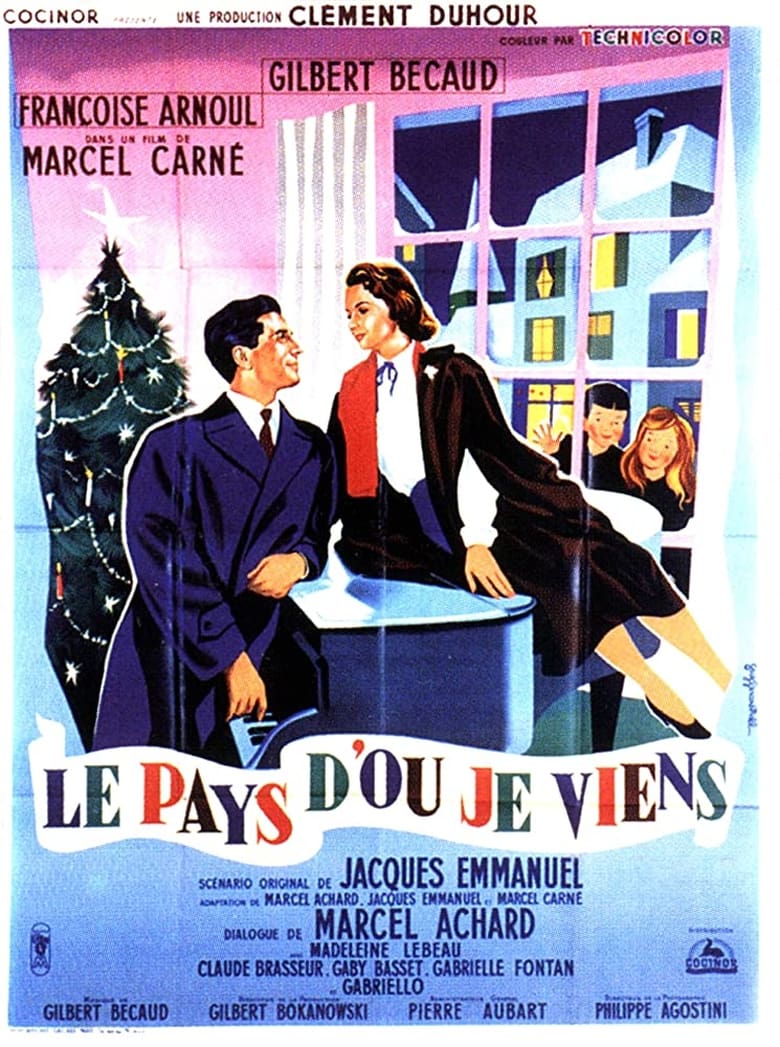
1956
Director
Marcel Carné
Runtime
94 minutes
Average Rating
No ratings yetSynopsis
One Christmas Eve, a carefree young man, Eric, arrives in a small provincial town. Here, he meets Julien, a bar pianist who is his exact double. Julien is in love with Marinette, a pretty waitress, but he is too shy to make any romantic overtures. Eric decides to give the course of true love a helping hand by pretending to be Julien. Meanwhile, Eric’s fabulously wealthy uncle has sent his minions out to bring him back home, so that he may celebrate Christmas in the bosom of his family.
Overall Score
Limited
Category Breakdown
LGBTQ+ Representation
The story follows a conventional romantic trajectory typical of the mid-century era. It centers on a traditional pursuit between Julien and Marinette without exploring non-cisnormative identities.
Gender Representation
The plot utilizes a male identity-swapping trope to facilitate romance. Marinette serves primarily as a romantic object, reflecting the gender hierarchies common in 1950s European cinema.
Racial & Ethnic Diversity
Set in a small French provincial town, the narrative appears to center on a homogeneous Western European cast. There is no indication of racial blending or non-white casting.
Religious & Cultural Diversity
The film reinforces traditional Western seasonal motifs and the sanctity of the family unit. It focuses on Christmas customs rather than offering secular or alternative cultural perspectives.
Disability Representation
The narrative contains no mention of characters with visible or invisible disabilities. There is no representation of neurodivergence or mental health conditions.
Strengths
Areas for Improvement
AI Analysis
The film operates as a traditional mid-century fantasy-comedy that adheres strictly to the social and cultural constraints of its era. Its narrative architecture prioritizes conventional romantic tropes and the reinforcement of traditional family values. While the film showcases cinematic craftsmanship through its character nuances, it lacks intersectional complexity. The story relies on established archetypes rather than subverting social norms or providing systemic critiques. Ultimately, the production reflects a homogeneous view of mid-1950s French life, focusing on a narrow, traditional demographic without exploring diverse identities or varied cultural backgrounds.
No reviews yet. Be the first to share your thoughts on this movie!
Use the rating form above to leave a star rating and optional review.