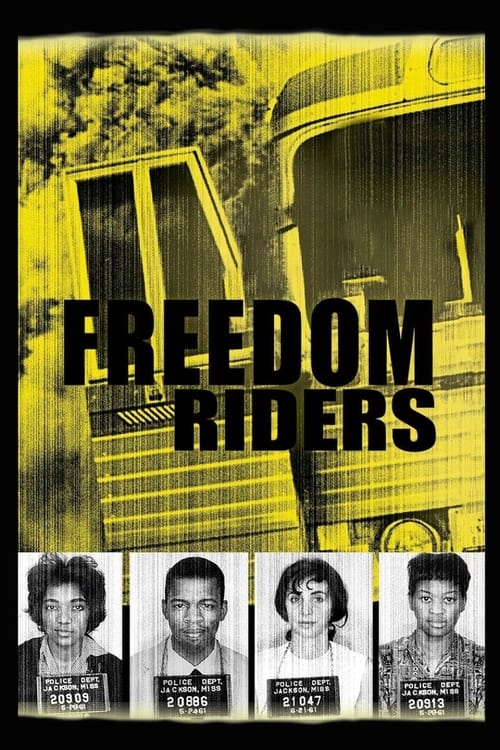
Freedom Riders
2010
No user ratings available yet
Representation score: 7.0 out of 10

Representation Score
Good
2014
PGDirector
Stanley Nelson
Runtime
113 minutes
Average Rating
No ratings yetNew Showbiz Analysis
Stanley Nelson’s documentary provides a sophisticated reconstruction of the 1964 civil rights movement. It successfully dismantles traditional historical hierarchies by prioritizing the ability to act of Black activists and women. By focusing on the Mississippi Freedom Democratic Party, the film challenges oppressive state structures and institutional corruption. The narrative architecture is intentionally designed to elevate voices historically excluded by the dominant cultural record. It moves beyond 'great man' theories of history to highlight grassroots mobilization and systemic struggle.
Category Breakdown
The film focuses on the racial and gendered dimensions of the 1964 civil rights movement. It does not explicitly center LGBTQ+ identities, maintaining a neutral stance rather than promoting assumptions about straight relationships.
The documentary disrupts traditional hierarchies by centering the leadership and control of women. Figures like Fannie Lou Hamer are portrayed as primary drivers of grassroots mobilization rather than passive observers.
The film achieves exceptional representation by centering a Black-majority narrative. It uses archival footage to give real power to Black activists, reclaiming them as central protagonists of the movement.
The narrative critiques corrupt Western institutions and portrays the Black church as a hub for community empowerment. It frames the struggle as a necessary confrontation with systemic injustice.
While the film documents physical trauma and violence inflicted upon activists, it does not explicitly center disability as a primary identity or narrative arc.
Present on Screen
Limited or Absent
Official Synopsis
In the summer of 1964, more than 700 students descended on violent, segregated Mississippi. Defying authorities, they registered voters, created freedom schools, and established the Mississippi Freedom Democratic Party. Fifty years later, eyewitness accounts and never-before-seen archival material tell their story. Not all of them would make it through.
2010
2012
1994

2020

2015

2013
2012

2017
No reviews yet. Be the first to share your thoughts on this movie!
Use the rating form above to leave a star rating and optional review.