Find another title
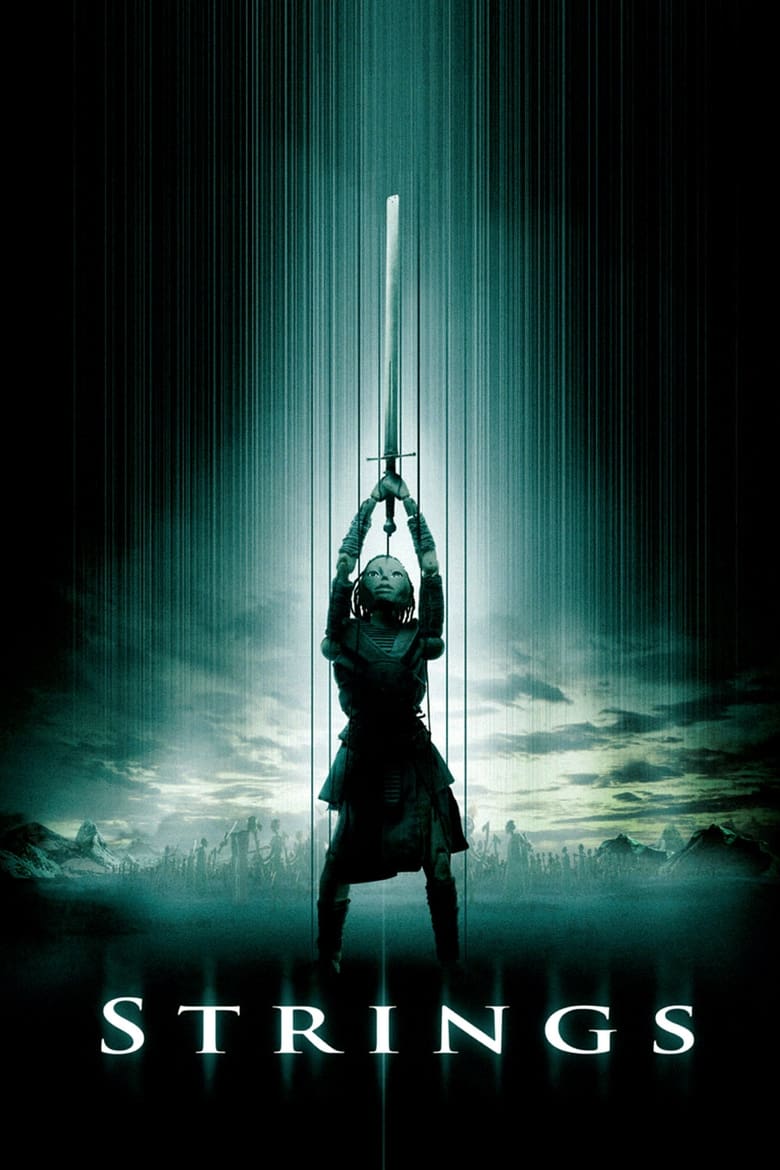
Strings
2004
PGDirector
Anders Rønnow Klarlund
Runtime
88 minutes
Average Rating
No ratings yetSynopsis
The story of Prince Hal who sets out to avenge his dead father against the city's rivals, the Zeriths, little knowing it was his wicked uncle Nezo who is the real killer, with his own designs on the throne.
Where to Watch
Diversity & Representation
Overall Score
Fair
Category Breakdown
LGBTQ+ Representation
The film lacks explicit evidence of LGBTQ+ identities or non-cisnormative gender expressions. The narrative focuses on abstract tensions regarding agency rather than identity-based dynamics.
Gender Representation
Stylized, non-human figures avoid traditional gender hierarchies. While not explicitly subverting masculinity or femininity, the characters function as vessels for existential struggle rather than gendered archetypes.
Racial & Ethnic Diversity
The minimalist and surrealist animation style means characters lack specific racial or ethnic signifiers. The abstract environment precludes a traditional analysis of ethnic diversity.
Religious & Cultural Diversity
The film engages with themes of systemic oppression and the struggle for autonomy. This critique of centralized power and dominant structures provides a moderate level of cultural depth.
Disability Representation
The film serves as a metaphor for the loss of bodily autonomy. The characters' reliance on external strings explores themes of dependency and dictated physical movement.
Strengths
- Uses a unique puppet metaphor to critique systemic oppression and centralized power.
- Disrupts traditional gendered archetypes through stylized, non-human character design.
- Offers a profound visual exploration of bodily autonomy and physical agency.
Areas for Improvement
- Lacks explicit representation of LGBTQ+ identities or non-cisnormative expressions.
- Provides no specific racial or ethnic signifiers within its abstract environment.
- Does not offer direct depictions of disability, relying instead on metaphor.
AI Analysis
Strings is a specialized, experimental work that prioritizes philosophical inquiry over demographic representation. It uses stop-motion animation to explore the semiotics of manipulation and the relationship between individuals and authority. The film's strength lies in its narrative architecture, which challenges traditional notions of agency. It functions as a postmodern critique of control rather than a character-driven drama centered on identity. Because the setting is abstract and the characters are stylized puppets, the film remains neutral on most specific identity-based metrics. It lacks the specific agency or signifiers required for higher diversity scores.
Rate this Movie
Reviews
No reviews yet. Be the first to share your thoughts on this movie!
Use the rating form above to leave a star rating and optional review.