Find another title
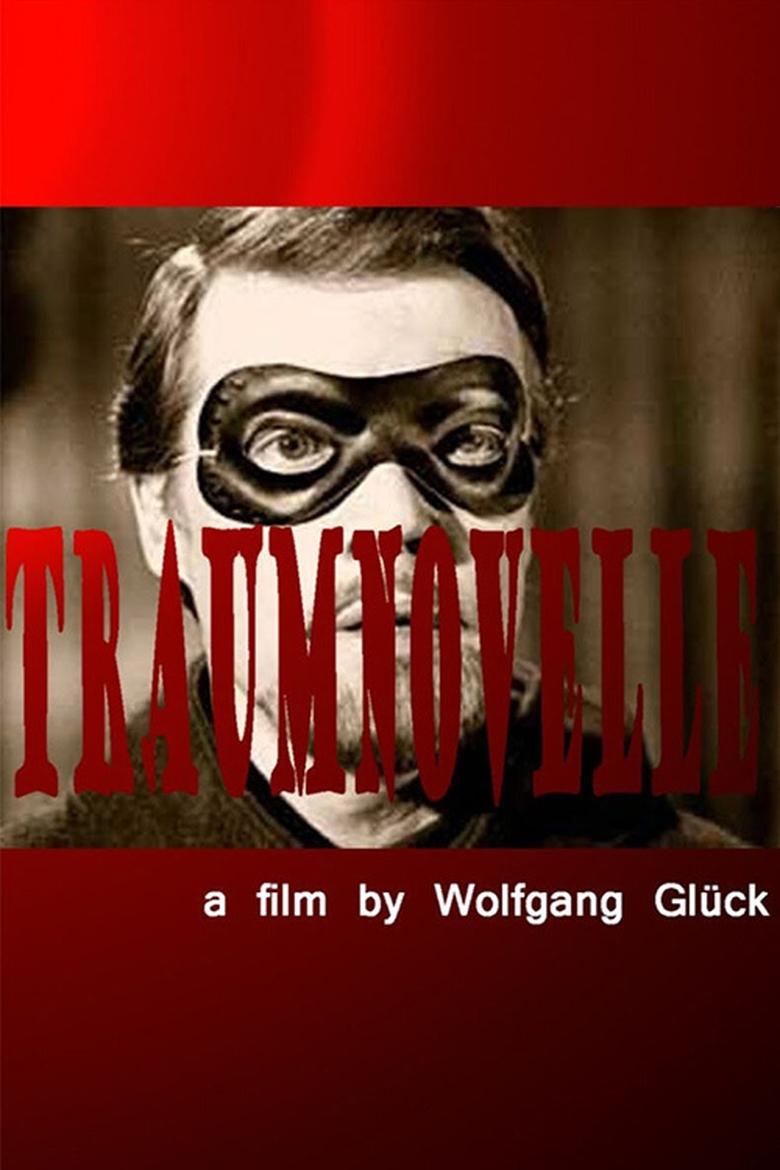
Traumnovelle
1969
Director
Wolfgang Glück
Runtime
75 minutes
Average Rating
No ratings yetSynopsis
After a frank confession by his wife, a doctor is called to see a dying patient. The cause of the night brings him to meet an old friend, a pianist, who tells him of a mysterious ball where he is due to perform. Based on the book "Traumnovelle" ("Rhapsody: A Dream Novel") by Arthur Schnitzler.
Where to Watch
Diversity & Representation
Overall Score
Fair
Category Breakdown
LGBTQ+ Representation
The film focuses on heteronormative romantic and sexual desires. While it explores repressed longing and subconscious impulses, it lacks explicit depictions of non-cisnormative identities or same-sex intimacy.
Gender Representation
The narrative disrupts domestic hierarchies by centering on a wife's confession. This shifts the focus to female psychological landscapes and portrays masculine vulnerability through the doctor's unraveling.
Racial & Ethnic Diversity
The film depicts a homogeneous, middle-class European social stratum. There is no evidence of non-white casting or racial diversity within this specific Western European bourgeois setting.
Religious & Cultural Diversity
The story prioritizes subjective desire over institutional morality. By favoring a secular, psychoanalytic approach to human behavior, it disrupts traditional Christian or external ethical frameworks.
Disability Representation
Psychological distress and a dying patient serve as narrative devices. However, characters with disabilities lack significant agency, as the focus remains on the able-bodied protagonists' internal states.
Strengths
- Subverts traditional domestic hierarchies by centering the female protagonist's perspective.
- Explores masculine vulnerability and the instability of authority through the doctor's psychological unraveling.
- Challenges rigid institutional morality by prioritizing subjective, psychoanalytic truths.
Areas for Improvement
- Lacks racial and ethnic diversity, focusing on a homogeneous European middle class.
- Provides minimal representation of non-cisnormative identities or same-sex intimacy.
- Does not grant significant agency to characters with visible or invisible disabilities.
AI Analysis
Wolfgang Glück’s adaptation is a sophisticated psychological study that challenges traditional moral certainties. It succeeds in subverting gendered stability by centering female agency and exploring masculine vulnerability through the protagonist's psychological collapse. However, the film's progressive impact is limited by its narrow demographic scope. The narrative is deeply rooted in a homogeneous European social stratum, offering little in the way of racial or ethnic diversity. Ultimately, while the film excels at exploring the fluidity of the subconscious, it remains tethered to established romantic archetypes and a culturally specific, Western European setting.
Rate this Movie
Reviews
No reviews yet. Be the first to share your thoughts on this movie!
Use the rating form above to leave a star rating and optional review.