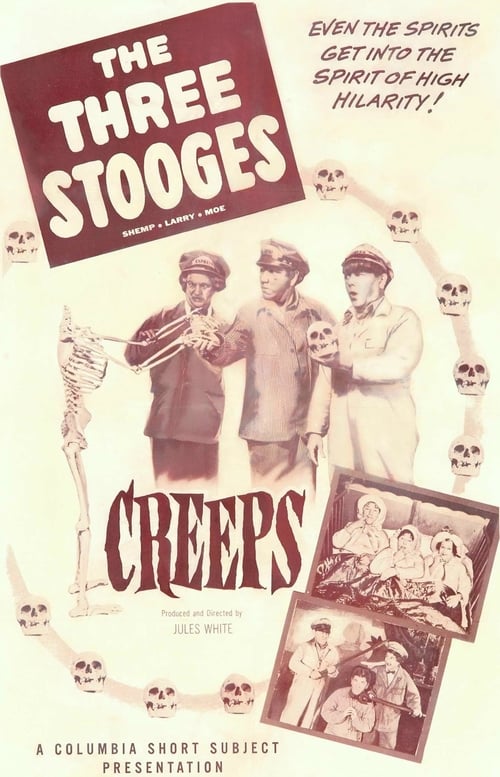
Creeps
1956
No user ratings available yet
Representation score: 0.5 out of 10

Representation Score
Minimal
1957
PassedDirector
Jules White
Runtime
16 minutes
Average Rating
No ratings yetNew Showbiz Analysis
Hoofs and Goofs is a quintessential mid-century slapstick comedy that prioritizes physical humor over social commentary. The narrative relies on traditional comedic archetypes that reinforce the social and gender hierarchies of the 1950s. The plot revolves around a surreal dream involving a reincarnated horse, but the character dynamics remain rooted in conventional comedic clichés. Humor is derived from chaos and caricature, rather than any meaningful subversion of cultural or social norms. Ultimately, the film lacks depth in addressing various forms of diversity. It functions as a formulaic comedy that upholds the status quo of its era through homogeneous casting and gender-based mockery.
Category Breakdown
The film uses cross-dressing and drag performances mainly for comedic effect and situational irony, rather than exploring LGBTQ identities.
Femininity in the film is portrayed through transactional roles that drive male-centric conflicts. Traditional domestic archetypes and slapstick violence reinforce gender hierarchies.
The cast is predominantly white and homogeneous, typical of 1950s American comedy. There is no indication of racial blending or challenging Anglo-centric norms.
The story follows traditional domestic chaos clichés without critiquing Western social structures or institutions. It adheres to era-specific comedic formulas.
There are no visible or implied representations of characters with disabilities in the film.
Present on Screen
Limited or Absent
Official Synopsis
Joe dreams that the stooge's sister Birdie has died and been reincarnated as a horse. The stooges take Birdie home but must conceal her from the snoopy landlord. They succeed, but more complications ensue when Birdie gives birth to a colt. Joe wakes up to suffer some abuse from the real Birdie (Moe in drag), when he tells her he dreamed she was a horse.
1956
1948
1953
1955
1953
1958
1947
1955
No reviews yet. Be the first to share your thoughts on this movie!
Use the rating form above to leave a star rating and optional review.