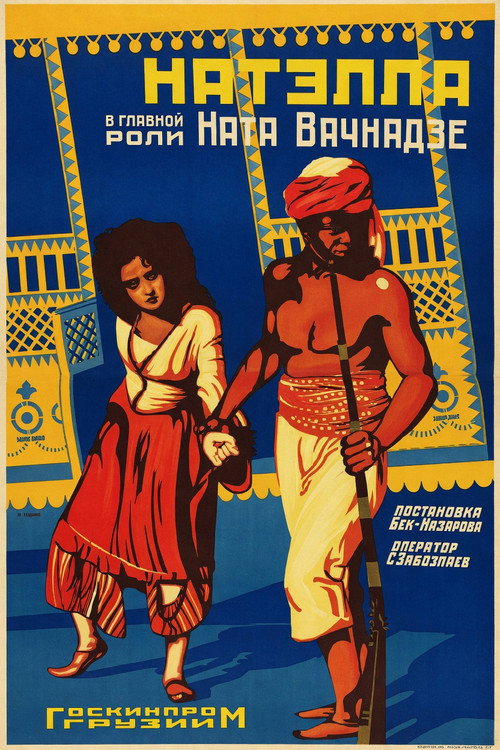
Natela
1926
No user ratings available yet
Representation score: 6.3 out of 10
Representation Score
Fair
1929
Director
Nikoloz Shengelaia
Runtime
90 minutes
Average Rating
No ratings yetNew Showbiz Analysis
Eliso is a progressive historical drama that centers on the socio-political realities of a non-Western population. It uses ethnic and religious identity as the primary drivers of its narrative conflict. The film's strength lies in its critique of imperial authority and its focus on the multi-layered identities of its characters. By highlighting the ability to act of a female protagonist and underrepresented ethnic groups, it avoids many traditional colonial clichés. However, the film lacks representation for LGBTQ+ identities and disability. Its scope remains focused on the tension between local populations and imperial structures.
Category Breakdown
The film explores a romantic conflict influenced by religious and ethnic differences. It does not include any LGBTQ+ identities or narratives related to sexual orientation.
Eliso serves as the main character and emotional focal point, shifting the narrative from masculine dominance to a strong female presence. The story highlights the experiences of women during political turmoil and forced relocation.
The film centers around Muslim Georgians and their resistance against the Tsarist regime. It portrays the Cossacks as oppressors, emphasizing the ability to act of the indigenous population.
A romance between a Muslim woman and a Christian man introduces religious diversity. The story criticizes imperial land seizures and the use of state institutions for forced displacement.
There is no documented evidence regarding the portrayal of physical or neurodivergent disabilities in this work.
Present on Screen
Limited or Absent
Official Synopsis
Georgia, 1864. The Tsarist regime is using Cossacks to forcibly resettle Muslim Georgians to Turkey in order to steal their land. Meanwhile a Muslim girl falls in love with a Christian from the next village.
1926

2004

1958

1969

1927
1956
2005
1926
No reviews yet. Be the first to share your thoughts on this movie!
Use the rating form above to leave a star rating and optional review.