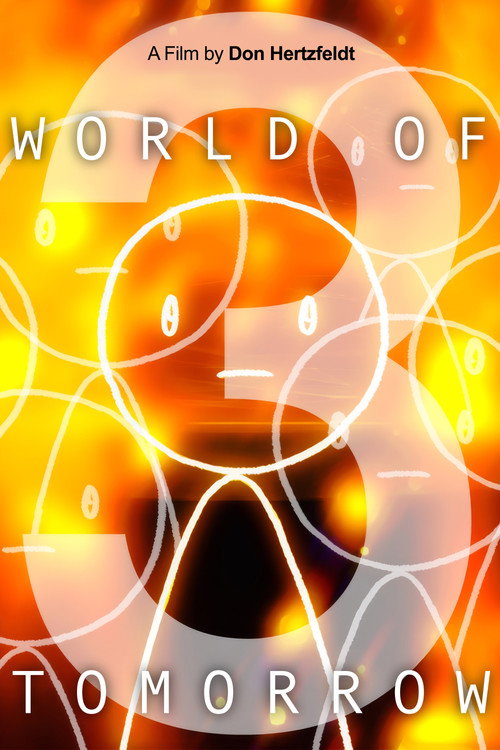
World of Tomorrow Episode Three: The Absent Destinations of David Prime
2020
No user ratings available yet
Representation score: 8.7 out of 10
Representation Score
Excellent
2017
TV-GDirector
Don Hertzfeldt
Runtime
23 minutes
Average Rating
No ratings yetNew Showbiz Analysis
Don Hertzfeldt’s work succeeds by breaking down traditional Western social structures. By centering the narrative on female consciousness and existential struggles, the film moves beyond conventional gender roles and domesticity. The minimalist animation style creates a universal experience but limits explicit visibility for racial and LGBTQ+ identities. This abstraction avoids stereotypes but lacks specific cultural or ethnic celebration. Ultimately, the film's strength lies in its thematic depth. It provides a sophisticated critique of techno-capitalism and the psychological impact of hyper-connectivity, offering a progressive view of the post-human self.
Category Breakdown
The film avoids typical heterosexual relationship clichés by focusing on a temporal connection between two versions of the same female consciousness. It doesn't show same-sex intimacy or include non-straight identities.
The story focuses entirely on female protagonists, removing traditional male-dominated structures. This emphasis on women's ability to drive the story subverts traditional gender power dynamics.
Minimalist stick-figure animation removes specific racial identifiers, creating a universal abstraction. While this avoids stereotypes, it also skips celebrating diverse ethnic identities.
The film critiques modern society by showing a world where traditional institutions like religion and the nuclear family are gone. It explores the self as a digital entity.
The story deeply explores cognitive overload and sensory processing issues. Characters navigate a fragmented memory landscape that reflects non-typical cognitive states.
Present on Screen
Limited or Absent
Official Synopsis
Emily Prime is swept into the brain of an incomplete backup clone of her future self.
2020

2012
2015
2013
2006
2013

2024
2011
No reviews yet. Be the first to share your thoughts on this movie!
Use the rating form above to leave a star rating and optional review.