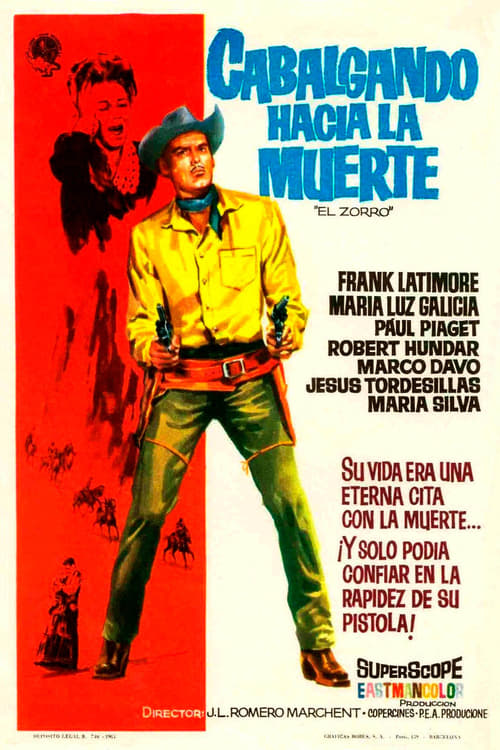
The Shadow of Zorro
1962
No user ratings available yet
Representation score: 2.6 out of 10
Representation Score
Minimal
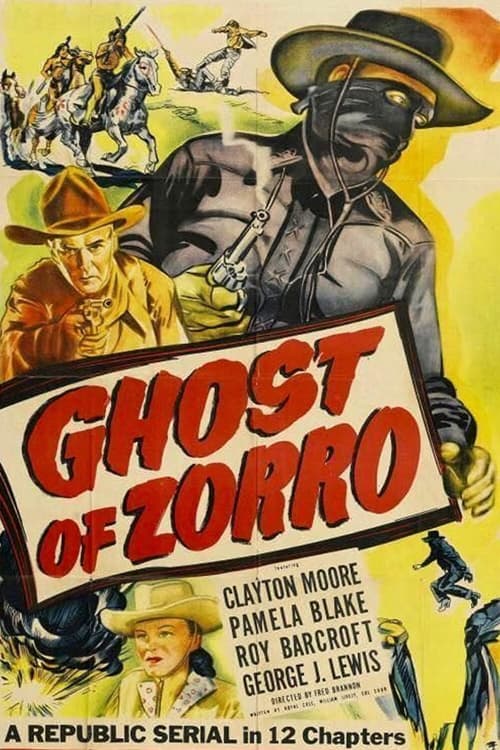
1949
ApprovedDirector
Fred C. Brannon
Runtime
167 minutes
Average Rating
No ratings yetNew Showbiz Analysis
Ghost of Zorro is a classic mid-century adventure serial that emphasizes genre clichés over social complexity. It relies heavily on the masked vigilante archetype to drive a straightforward hero-versus-villain narrative. The film's social landscape is shaped by the era's standard hierarchies. Characters are often binary, with men driving the action and women serving as secondary motivators or figures in need of rescue. Though set in Spanish California, the production does not delve into the cultural or ethnic nuances of the period. It remains focused on action and moral clarity.
Category Breakdown
The serial does not include any LGBTQ+ characters or explore non-straight relationships. Romantic relationships are confined to traditional pairings.
Gender roles are strictly hierarchical, with the female lead often needing rescue. The male protagonist drives the plot and controls the narrative.
Set in Spanish California, the film adheres to 1949 Hollywood standards without delving into ethnic complexities. The story simplifies the hero-versus-villain dynamic.
The story operates within a traditional Western moral framework. It uses the masked vigilante to restore social order without questioning systemic power structures.
The film does not feature any characters with visible or invisible disabilities. It does not address neurodivergence or physical impairments.
Present on Screen
Limited or Absent
Official Synopsis
Although ostensibly the grand-son of the legendary hero, Clayton Moore's Ken Mason is little more than a cowboy in a black mask in this 12 chapter Republic serial. Mason, the head of the telegraph line work crew, assumes his ancestor's trade-mark mask (but not whip) in order to prevent a local czar (Roy Barcroft) from sabotaging the burgeoning telegraph line. Pamela Blake, a brunette starlet formerly known as Adele Pearce, played Mason's imperiled girlfriend, and the serial also benefitted from the usual competent work of Republic's great stunt-performers, including Dale van Sickel, Tom Steele, Eddie Parker, and Joe Yrigoyen.
1962
1975
1920
1940
1974
1962

1975
1940
No reviews yet. Be the first to share your thoughts on this movie!
Use the rating form above to leave a star rating and optional review.