Find another title
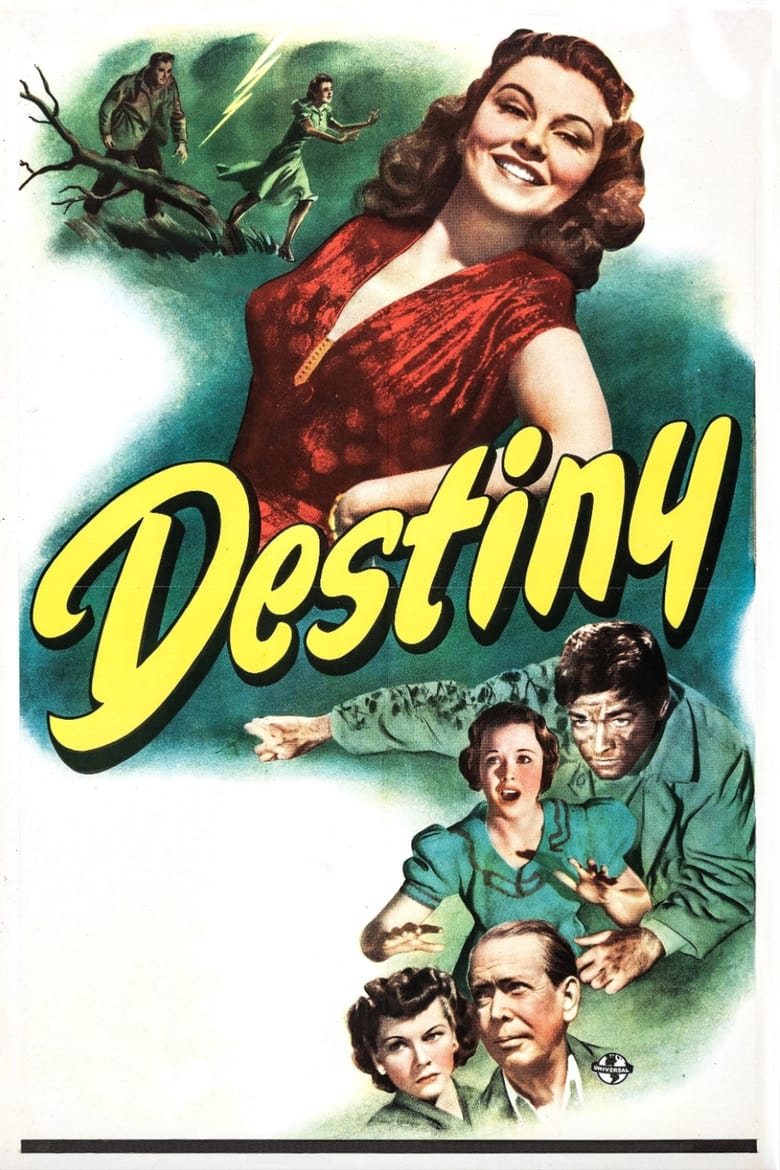
Destiny
1944
ApprovedDirector
Reginald Le Borg, Julien Duvivier
Runtime
65 minutes
Average Rating
No ratings yetSynopsis
Framed for two crimes he didn't commit, and betrayed by his girl, Cliff Banks finds himself on the run from the police. Now distrustful of everyone, he finds a safe haven hiding out at a quaint country cottage under the care of a kindly old farmer and his daughter, a Cinderella-like blind woman who seems to be able to communicate with nature. There he is forced by their love to question his misanthropy.
Where to Watch
Diversity & Representation
Overall Score
Limited
Category Breakdown
LGBTQ+ Representation
The film follows a conventional romantic trajectory centered on a male protagonist and a female love interest. It adheres to standard romantic tropes of the era without exploring non-cisnormative identities.
Gender Representation
While the female lead possesses spiritual agency, the plot is driven by the male protagonist's criminal redemption. The narrative relies on a Cinderella archetype that reinforces traditional tropes of female passivity.
Racial & Ethnic Diversity
The casting of Cuban-born actress Maria Montez provides notable ethnic diversity for a 1944 production. This presence introduces ethnic complexity to the central romance that deviates from typical era casting.
Religious & Cultural Diversity
The story operates within a traditional moral framework focused on social reintegration through love. It aligns with mid-century Western ideals of moral restoration and social cohesion.
Disability Representation
A character with a visual impairment is central to the emotional core. However, her disability serves primarily as a tool for the protagonist's moral awakening rather than showcasing independent agency.
Strengths
- The casting of Maria Montez introduces significant ethnic diversity for a 1944 Hollywood production.
- The female lead possesses a unique spiritual agency and a deep connection to her environment.
Areas for Improvement
- The narrative relies on the Cinderella archetype, which reinforces traditional tropes of female passivity.
- Disability is used as a symbolic device for purity rather than portraying independent agency.
- The plot is fundamentally driven by the male protagonist's needs and redemption arc.
AI Analysis
Destiny is a quintessential mid-century melodrama that prioritizes traditional moral arcs and romantic tropes. While it offers some deviation from the era's standard casting, its thematic structure remains deeply rooted in conventional social norms. The film's strength lies in its casting of Maria Montez, which provides a layer of ethnic complexity rarely seen in 1944 Hollywood. However, this is offset by a narrative that uses female characters and disability as instruments for male character development. Ultimately, the film functions as a period piece that reinforces existing hierarchies. It uses its characters to facilitate a standard journey from misanthropy to social reintegration, rather than challenging the status quo.
Rate this Movie
Reviews
No reviews yet. Be the first to share your thoughts on this movie!
Use the rating form above to leave a star rating and optional review.