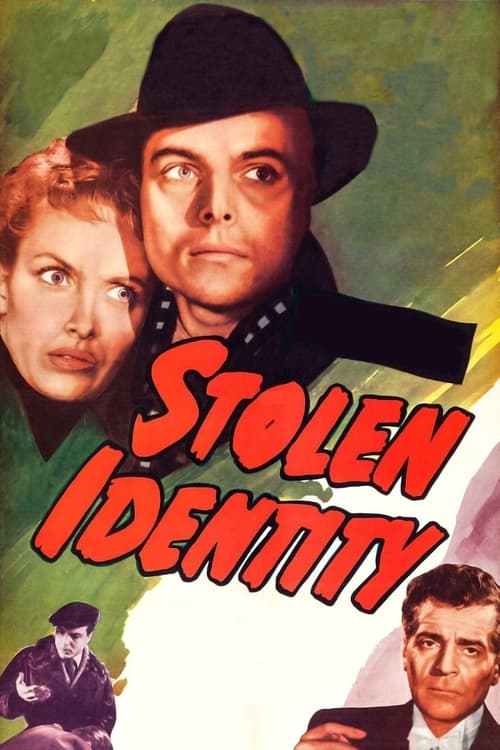
Stolen Identity
1953
No user ratings available yet
Diversity score: 1.9 out of 10

1951
NRDirector
King Vidor
Runtime
91 minutes
Average Rating
No ratings yetSynopsis
Sent to a dude ranch in the west to recover her health, a New York actress falls in love with a ranch owner recently acquitted of the murder of his wife.
Overall Score
Limited
Category Breakdown
LGBTQ+ Representation
The film lacks any presence of non-cisnormative identities. The central romantic arc follows a traditional heterosexual paradigm typical of 1950s studio productions.
Gender Representation
The story relies on a gendered dichotomy between a fragile urban woman and a rugged male authority figure. While the female lead is an actress, her role centers on emotional recovery and romance.
Racial & Ethnic Diversity
The production reflects the homogeneous casting norms of the early 1950s. There is no evidence of a non-Anglo-Saxon majority cast or intentional disruption of historical racial norms.
Religious & Cultural Diversity
The narrative operates within traditional Western values and ideals of rugged individualism. It focuses on individual morality and legal resolution within existing social systems.
Disability Representation
A character's need to recover her health serves as a standard plot device. There is no nuanced exploration of neurodivergence or chronic illness presented.
Strengths
Areas for Improvement
AI Analysis
Lightning Strikes Twice is a product of its historical era, adhering to the conventional social hierarchies and narrative tropes of 1950s American cinema. It functions as a traditional noir-inflected melodrama that relies on established genre expectations. The film centers on the intersection of urban sophistication and frontier masculinity. This framework reinforces mid-century social structures rather than attempting to subvert them. Ultimately, the work lacks the intentionality required to provide intersectional representation or disrupt traditional power dynamics, remaining firmly within the period's standard storytelling boundaries.
No reviews yet. Be the first to share your thoughts on this movie!
Use the rating form above to leave a star rating and optional review.