Find another title
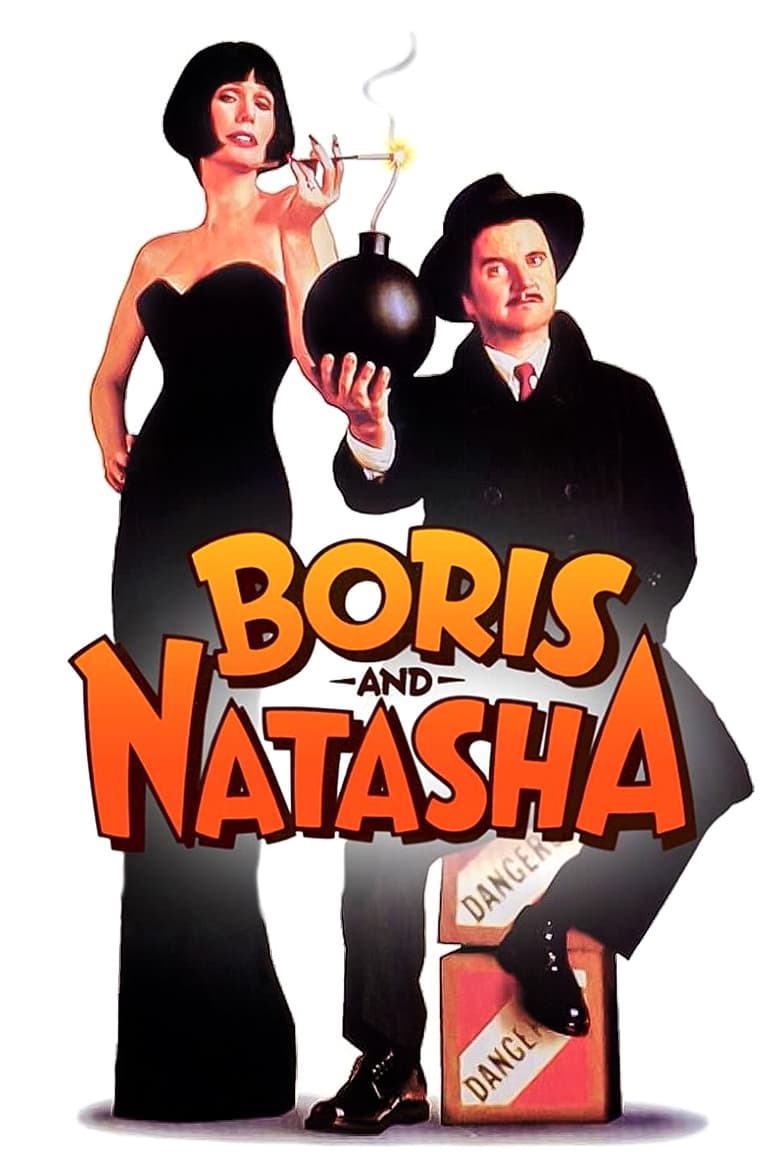
Boris and Natasha
1992
PGDirector
Charles Martin Smith
Runtime
88 minutes
Average Rating
No ratings yetSynopsis
Sent by Fearless Leader to America to find an important microchip, dastardly Pottsylvanian spies Boris Badenov and Natasha Fatale begin questioning who they're working for and why.
Where to Watch
Diversity & Representation
Overall Score
Limited
Category Breakdown
LGBTQ+ Representation
The film focuses on a traditional heterosexual romantic pairing between the protagonists. It lacks any discernible non-cisnormative gender identities or queer narratives within the primary character arcs.
Gender Representation
The female lead possesses significant agency, yet the narrative remains tethered to standard romantic comedy dynamics. Male leads maintain traditional roles of pursuit and protection, limiting full gender subversion.
Racial & Ethnic Diversity
The story centers on the intersection of American and Soviet identities. While the cast remains largely Eurocentric, the narrative emphasizes blending disparate cultural backgrounds through a central romantic connection.
Religious & Cultural Diversity
The film prioritizes individual human connection over rigid Cold War ideological structures. It functions as a humanistic bridge between East and West rather than an explicit systemic critique.
Disability Representation
There is no visible or invisible disability representation present in the core narrative. Characters appear to function within able-bodied norms throughout the story.
Strengths
- Subverts geopolitical silos by emphasizing human connection over political dogma.
- Provides the female lead with significant agency in navigating foreign environments.
- Uses a cross-cultural framework to bridge disparate national identities.
Areas for Improvement
- Lacks representation of LGBTQ+ identities or non-cisnormative gender narratives.
- Relies on traditional gender roles and romantic comedy tropes.
- Fails to include any visible or invisible disability representation.
AI Analysis
Boris and Natasha operates as a character-driven romantic comedy that reflects the temporal context of its era. It succeeds in humanizing geopolitical rivals, using romance to bridge the gap between American and Soviet identities. This approach offers a subtle critique of state-driven nationalism. However, the film relies heavily on traditional narrative structures. The treatment of gender and identity remains conventional, lacking the intersectional complexity or intentional systemic subversion found in more diverse modern works. While it avoids harmful Cold War stereotypes, it does not push boundaries regarding identity. Ultimately, the film is a moderate exploration of cultural boundaries that stays within safe, heteronormative, and Eurocentric lanes.
Rate this Movie
Reviews
No reviews yet. Be the first to share your thoughts on this movie!
Use the rating form above to leave a star rating and optional review.