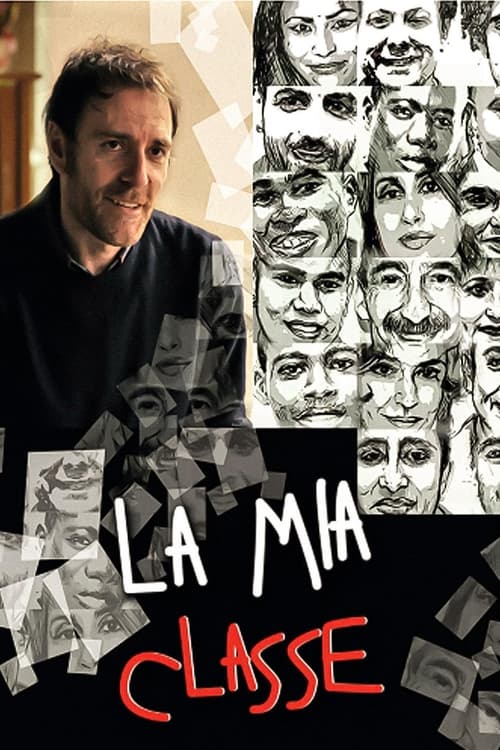
My Class
2013
No user ratings available yet
Diversity score: 7.1 out of 10

2004
Director
Amos Gitai, Mika Kaurismäki, Jim McBride, Maria de Medeiros, Wolfgang Becker, Hanna Elias, Yoshishige Yoshida, Leon Cakoff, Renata de Almeida, Phillip Noyce, Tsai Ming-liang, Caetano Veloso
Runtime
96 minutes
Average Rating
No ratings yetSynopsis
All the feature is given prestige to by the narration in Caetano Veloso's voice, that also signs one of the segments of the project. São Paulo is the largest city of the Southern Hemisphere, with an incessant dynamics of cultural mixtures, with immigrants of all the world and migrants of all parts of Brazil. The gathering of these peculiarities are seen through the 13 film directors's sensibilities and their segments.
Overall Score
Good
Category Breakdown
LGBTQ+ Representation
The anthology format allows for fragmented explorations of intimacy and identity. While the directorial pedigree suggests meaningful representation, specific depictions of non-cisnormative identities remain unconfirmed.
Gender Representation
The involvement of female directors like Maria de Medeiros suggests a lens that challenges conventional hierarchies. The film avoids traditional patriarchal tropes by focusing on the city's chaotic, shifting nature.
Racial & Ethnic Diversity
The film excels by centering the cultural mixtures of immigrants and migrants. A global roster of directors disrupts Western hegemony, celebrating racial blending as a foundational element of the city.
Religious & Cultural Diversity
The project demonstrates high complexity by framing the city through diverse sensibilities. The involvement of Caetano Veloso suggests a narrative prioritizing cultural fluidity and the subversion of traditional structures.
Disability Representation
There is insufficient evidence to determine if disability is a central theme. It is unclear if characters with disabilities are afforded specific agency within the urban environment.
Strengths
Areas for Improvement
AI Analysis
Welcome to São Paulo succeeds as a decentralized mosaic of global perspectives. By utilizing thirteen different directors, the film mirrors the actual sociological complexity of a massive, migrant-heavy metropolis. The strength of the work lies in its structural commitment to racial and ethnic diversity. It rejects monolithic storytelling in favor of a postmodern, fluid reality that celebrates the city's inherent cultural mixtures. However, the anthology format results in a fragmented experience. While the diverse directorial voices provide a broad lens, specific character arcs regarding gender and LGBTQ+ identities lack clear, sustained visibility.
2013
2015
2014
2017
No reviews yet. Be the first to share your thoughts on this movie!
Use the rating form above to leave a star rating and optional review.