Shirley Temple: The Biggest Little Star
1996
No user ratings available yet
Representation score: 1.1 out of 10
Representation Score
Minimal
1943
ApprovedDirector
Edward L. Cahn
Runtime
11 minutes
Average Rating
No ratings yetNew Showbiz Analysis
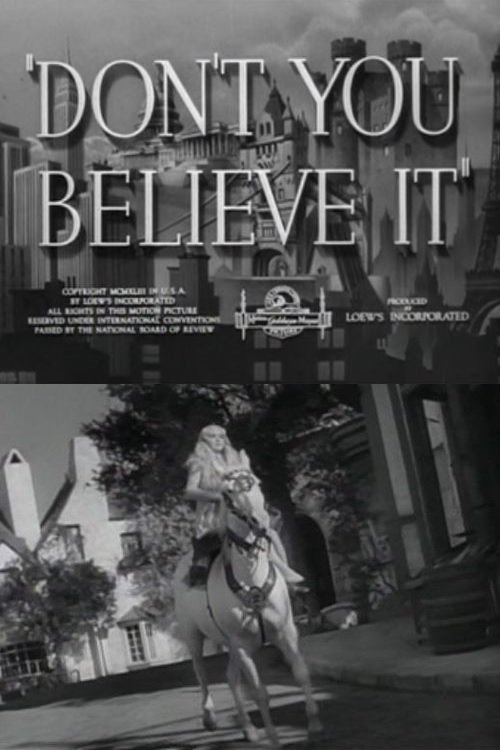
Don't You Believe It serves as a tool to debunk popular historical myths. While it effectively questions the accuracy of well-known legends, it does so through a narrow, Western-centric lens. The film concentrates on specific historical anecdotes, such as the Great Chicago Fire and Nero's fiddling. This focus results in a narrative that lacks engagement with diverse human experiences. Ultimately, the documentary prioritizes historical literacy over social critique, reflecting its era by focusing on debunking folklore rather than exploring varied human experiences.
Category Breakdown
The film does not include any LGBTQ+ characters or stories. It focuses solely on debunking Western historical legends without addressing diverse sexual orientations or gender identities.
Women such as Lady Godiva and Mrs. O'Leary are featured, but they are portrayed primarily as part of folklore. The film emphasizes myth-busting over giving women significant roles or ability to act.
The film focuses on Western myths from ancient Rome to modern-day Chicago. It does not include perspectives from non-white or non-Anglo-Saxon communities.
The film uses skepticism to question official historical accounts. However, it does not engage with post-colonial perspectives or diverse cultural institutions.
The film does not feature any characters with visible or invisible disabilities. The historical figures mentioned do not include individuals with disabilities.
Present on Screen
Limited or Absent
Official Synopsis
This Passing Parade entry looks at several historical "truths" that just aren't so: Steve Brodie never jumped off the Brooklyn Bridge; Mrs. O'Leary's cow did not start the great Chicago fire; Nero didn't fiddle while Rome burned; and Lady Godiva never rode naked through the streets of Coventry.
1996

2012

1982
1981
1940
2003
1948

2019
No reviews yet. Be the first to share your thoughts on this movie!
Use the rating form above to leave a star rating and optional review.