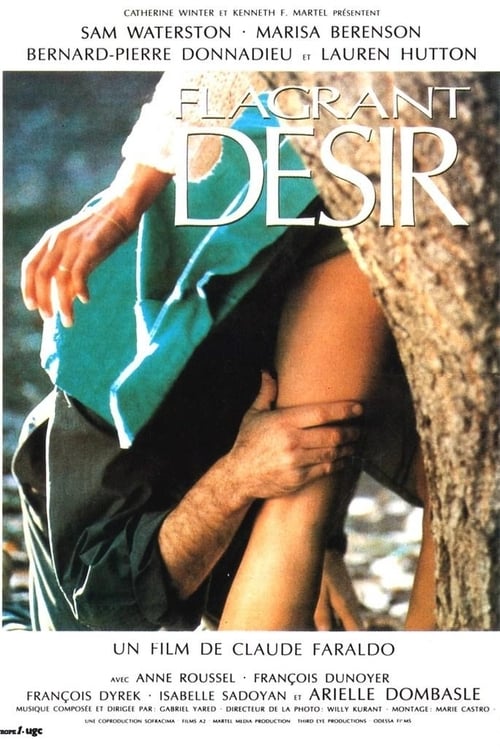
Flagrant désir
1986
No user ratings available yet
Representation score: 3.3 out of 10

Representation Score
Minimal
1986
Not RatedDirector
Claude Chabrol
Runtime
100 minutes
Average Rating
No ratings yetNew Showbiz Analysis
Claude Chabrol’s film centers on the psychological and social tensions within a provincial setting, rather than on diverse representation. It emphasizes the moral ambiguity and the clash between institutional law and local customs. The work effectively uses the Inspector as an outsider to explore the complexities of provincial morality. However, it lacks diversity in terms of race, gender identity, and disability, staying within a homogeneous, traditional social framework.
Category Breakdown
The film does not include any LGBTQ+ characters or non-straight relationships. The main conflict revolves around the Inspector's past relationship with a local woman, adhering to traditional heterosexual norms.
The story focuses on male-dominated law enforcement and village hierarchies, operating within a patriarchal framework. Female characters are primarily defined by their relationships to the male figures in the investigation.
Set in a mid-century French village, the cast is nearly uniform, reflecting the historical demographics of the time and place.
The film highlights the contrast between the Inspector’s legalistic approach to justice and the secretive social norms of the village community, critiquing the insularity of closed societies.
There is no representation of visible or invisible disabilities in the main storyline.
Present on Screen
Limited or Absent
Official Synopsis
Inspector Lavardin is called to a provincial village to investigate a murder – only to find that one of his ex-lovers is the victim’s widow.
1986

1970
1958

2008
1982
1981
1985

1986
No reviews yet. Be the first to share your thoughts on this movie!
Use the rating form above to leave a star rating and optional review.