The Rutles: All You Need Is Cash
1978
No user ratings available yet
Representation score: 2.1 out of 10
Representation Score
Fair
1984
Director
Tage Danielsson, Gösta Ekman, Hans Alfredson, Lena Nyman
Runtime
120 minutes
Average Rating
No ratings yetNew Showbiz Analysis
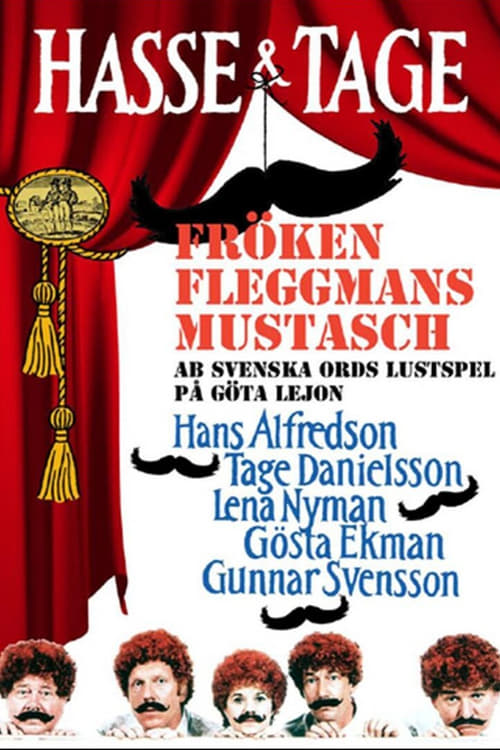
Miss Fleggman's Mustache is a sophisticated social commentary that uses musical comedy to explore Swedish history. Its strength lies in disrupting conventional identity expectations through gender-fluid casting and satire. The production prioritizes nuanced human temperaments over rigid character types. However, the work appears limited in its racial and ethnic breadth, focusing primarily on a homogeneous social landscape. It also lacks visible representation of physical or neurodivergent disabilities.
Category Breakdown
The production uses a revue format where actors play multiple roles, including those that involve cross-dressing and fluid gender presentations. These performances suggest a playful engagement with non-traditional gender expressions.
The film challenges traditional gender norms by having male actors portray various female roles. Characters like the weary Frida Fleggman provide a nuanced realism that moves away from idealized feminine stereotypes.
The narrative focuses on a relatively homogeneous social setting. Despite covering sixty years of Swedish history, there is no indication of significant racial or ethnic diversity within the depicted context.
The film uses satire to critique Swedish social history and national identity. By focusing on human traits rather than heroic narratives, it challenges the rigid social structures of the mid-20th century.
There is no specific information available regarding the portrayal of physical or neurodivergent disabilities in this work.
Present on Screen
Limited or Absent
Official Synopsis
Miss Fleggman's Mustache is not so much a revue as a musical comedy depicting 60 years of Swedish social history, with music by Gunnar Svensson and directed by the four actors in the original cast under the name Tage-Lena EkFredson. At the premiere on January 14, 1982, at Göta Lejon, some of AB Svenska Ord's leading comedians, Hasse Alfredson, Tage Danielsson, Lena Nyman, and Gösta Ekman, took on the play's many different roles, which reflect the four temperaments: the tired Frida Fleggman, the angry Kurt S Wresig, the cheerful Count Niklas von Sanguin, and the melancholic Alvar Dysterkvist. New characters quickly enter the scene, including Kolerik Wresig, who pretends to be Kurt Wresig's son, and Dysterkvist's voluptuous Norwegian daughter Hedvig, played by Tage in an unlikely guise.
1978
1986
1987

2007
1964
1974
1967
1992
No reviews yet. Be the first to share your thoughts on this movie!
Use the rating form above to leave a star rating and optional review.