
Fruits Basket -prelude-
2022
No user ratings available yet
Diversity score: 6.2 out of 10
2011
Not RatedDirector
Zep
Runtime
87 minutes
Average Rating
No ratings yetSynopsis
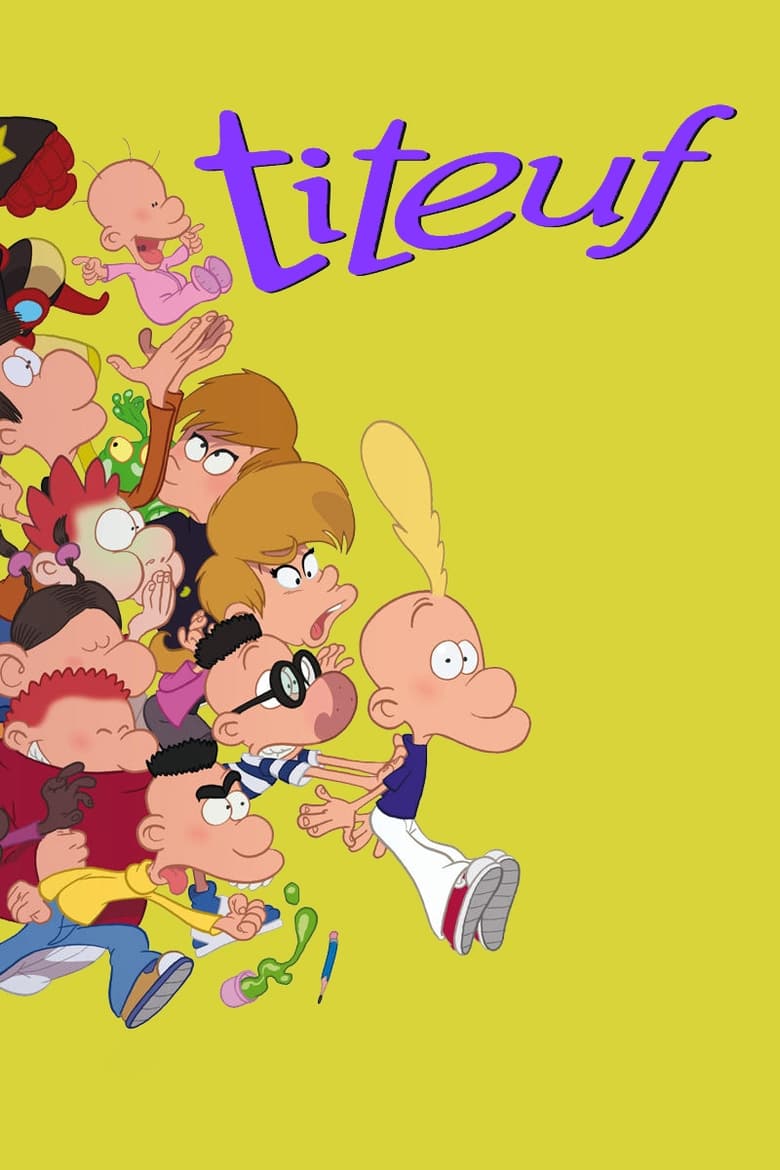
Titeuf is a comic series created by Swiss draughtsman Zep (real name Philippe Chapuis) depicting the life of a young boy (the title's namesake Titeuf, "Tootuff" in the English translation) and his vision of the adult world & themes such as love, sex, seduction and mysteries about the girls. In this film, Titeuf (Donald Reignoux) is off on a new comedic adventure! Things get complicated when Nadia (Melanie Bernier) doesn’t invite Titeuf to her birthday party, which is surely the most horrible moment of his life. Before long, Titeuf’s whole life is turned upside down when his parents are nearly deported. Everything continues to spiral out of control even in the midst of Titeuf’s exhaustive attempts to make matters right.
Overall Score
Good
Category Breakdown
LGBTQ+ Representation
The story focuses on traditional adolescent romantic interests and childhood social hierarchies. There is no evidence of explicit non-heteronormative identities or queer narratives within the plot.
Gender Representation
The film centers on the emotional agency of a young boy navigating social rejection. It avoids purely patriarchal tropes by focusing on internal emotional development and family instability.
Racial & Ethnic Diversity
The narrative introduces tension through the threat of the protagonist's parents being deported. This disrupts the convention of depicting homogeneous, stable Western domesticity as the default.
Religious & Cultural Diversity
The film engages with systemic critique by portraying state institutions as potentially oppressive. It prioritizes the subjective, chaotic reality of the individual over institutional stability.
Disability Representation
There is no evidence regarding the inclusion of characters with visible or invisible disabilities in the provided material.
Strengths
Areas for Improvement
AI Analysis
Titeuf (2011) evolves from a standard comedic adventure into a poignant critique of systemic social issues. By centering the plot on the precariousness of immigrant families facing deportation, the film moves beyond simple childhood whimsy to address real-world political instability. While the film excels at deconstructing authority and exploring the immigrant experience, it remains limited in its exploration of identity. The focus stays largely within traditional romantic and social frameworks, leaving little room for queer or disability-focused narratives. Ultimately, the film's strength lies in its ability to use a child's perspective to challenge the perceived stability of state institutions and social structures.
No reviews yet. Be the first to share your thoughts on this movie!
Use the rating form above to leave a star rating and optional review.