Nanga Parbat
2010
No user ratings available yet
Representation score: 3.2 out of 10
Representation Score
Limited
1991
Director
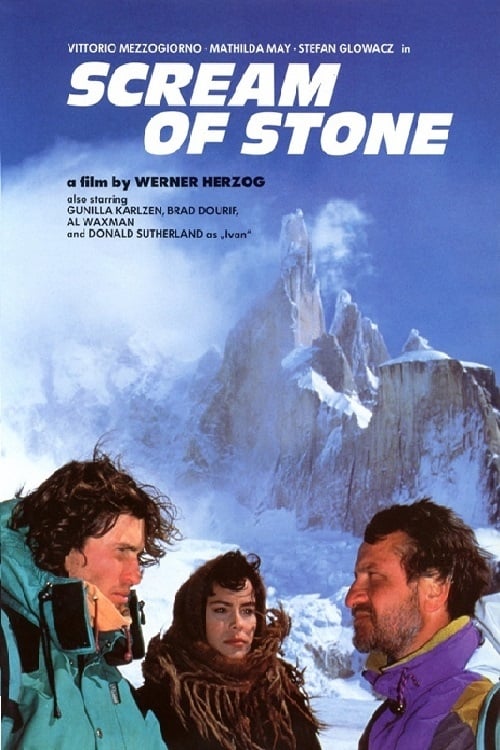
Werner Herzog
Runtime
105 minutes
Average Rating
No ratings yetNew Showbiz Analysis
Scream of Stone serves as a psychological character study rather than a conventional adventure film. It emphasizes dissecting the male ego and the friction between different climbing styles over broad demographic representation. The film offers a philosophical critique of the 'hero's journey,' questioning the meritocratic nature of such pursuits. However, this focus results in limited engagement with diverse identities and perspectives, maintaining a narrow, Eurocentric viewpoint.
Category Breakdown
The film focuses solely on the competitive tension between male protagonists. There is no representation of LGBTQ+ identities or stories that challenge the assumption that everyone is straight.
The story is driven by male pride and the validation of masculine skills. Women play minor roles and have little control over their situations, focusing instead on the central climbing rivalry.
Despite being set in Patagonia, the story centers on a homogeneous group of Western climbers. The film does not explore the diverse backgrounds of its South American setting.
Herzog uses the landscape to critique Western ideas of conquest and achievement. He challenges the romanticized notion of the heroic explorer through existential questions.
There is no focus on visible or invisible disabilities. The physical demands of climbing are presented as a normal part of the characters' lives.
Present on Screen
Limited or Absent
Official Synopsis
A meeting of two world famous climbers, one an experienced mountaineer the other a sport climber, and a journalist (Ivan) results in a bet on which of the two is the best climber. Roger (the mountaineering expert) states that Martin (the sport climber) wouldn't survive a day on a 'real' climbing expedition, although he is considered to be the world's best sport climber (having just won an indoor 'world championship,' an event depicted in the opening scene). They plan to climb 'Cerro Torre,' in the Patagonia region of South America, near the Argentinian/Chilean border, one of the world's most difficult mountains, especially considering the extreme weather conditions common to the area.
2010
2008
2004
2013
2015
2003
1982
2017
No reviews yet. Be the first to share your thoughts on this movie!
Use the rating form above to leave a star rating and optional review.