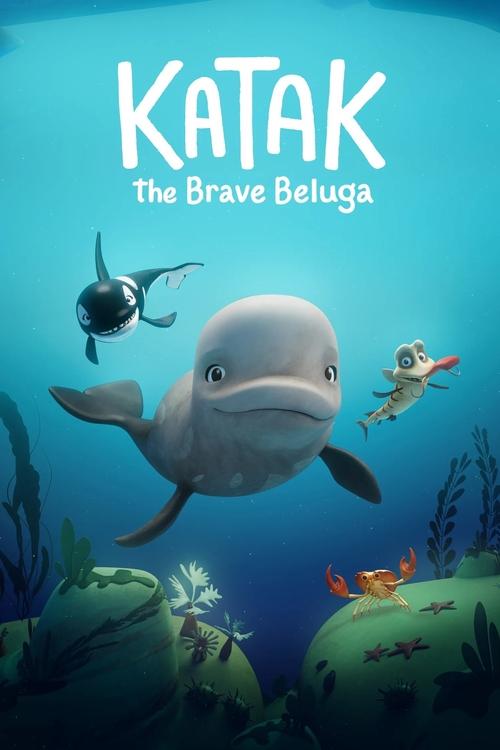
Katak: The Brave Beluga
2023
No user ratings available yet
Representation score: 5.5 out of 10
Representation Score
Good
2022
Director
Rémi Durin, Arnaud Demuynck
Runtime
65 minutes
Average Rating
No ratings yetNew Showbiz Analysis
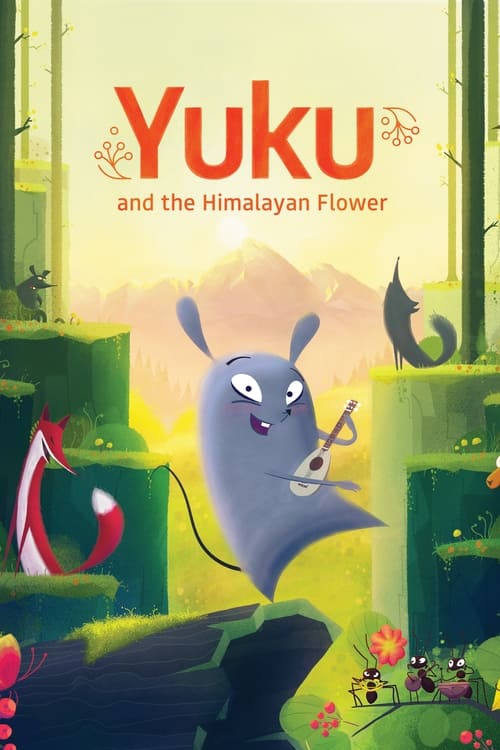
Yuku and the Himalayan Flower offers a character-driven adventure centered around matrilineal wisdom. By placing a female protagonist and a matriarchal figure at the heart of the journey, the film shifts away from traditional patriarchal mentorship models. The narrative integrates sensory diversity through the inclusion of a blind character and explores philosophical themes via folk tales. However, the film's reliance on anthropomorphic characters and a lack of explicit social representation limit its impact in certain categories. While it avoids formulaic clichés, it remains a relatively quiet exploration of diversity.
Category Breakdown
The story focuses on familial lineage and the transmission of values between generations. There are no explicit depictions of same-sex relationships or non-binary gender identities.
Yuku serves as a proactive female protagonist, breaking away from passive stereotypes. The film emphasizes a matrilineal structure, where wisdom is passed from a grandmother to her grandchild.
The Himalayan setting implies a specific cultural landscape, though the use of anthropomorphic animals creates a metaphorical distance. Visual details regarding specific ethnic motifs are not explicitly defined.
The film prioritizes oral traditions and folk tales over institutionalized religion. It explores spiritual themes like 'eternal light' through a philosophical rather than dogmatic lens.
A blind mole is introduced as a character within the world. Additionally, the protagonist's journey is motivated by her own physical vulnerability following an injury.
Present on Screen
Limited or Absent
Official Synopsis
Yuku is a young mouse who lives with her family in the cellar of a castle. Her grandmother passes on the family values by telling her timeless folk tales. Injured in a tussle with a cat, the old mouse is bedridden and she tells her children that she will have to leave them to follow the little blind mole into the Earth’s tunnels. In one of her grandmother’s storybooks, Yuku learns that the flower of the Himalayas can bring her eternal light. She leaves on a journey of discovery to find the flower.
2023
2006
2020
2022
2018
2015
2019
2021
No reviews yet. Be the first to share your thoughts on this movie!
Use the rating form above to leave a star rating and optional review.