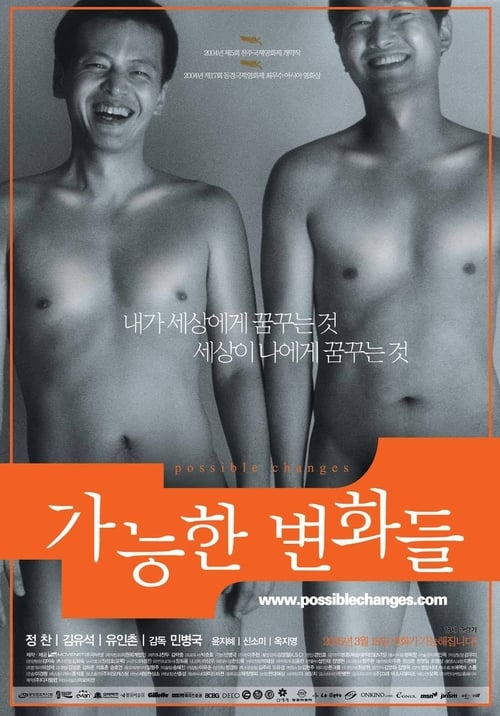
Possible Changes
2005
No user ratings available yet
Representation score: 4.2 out of 10

Representation Score
Fair
2002
Director
Park Ki-yong
Runtime
91 minutes
Average Rating
No ratings yetNew Showbiz Analysis
Park Ki-yong’s drama offers a sophisticated study of social transgression and individual autonomy. By placing two middle-aged, married strangers in a transient coastal setting, the film deconstructs traditional domestic roles and the rigid structures of societal obligations. The strength of the work lies in its refusal to provide easy moral resolutions. Instead, it uses a borrowed vehicle and anonymous spaces to explore the temporary suspension of identity and the rebellion against established social hierarchies. While the film excels at critiquing institutional stability and the nuclear family, it remains ethnically homogeneous and lacks explicit LGBTQ+ identities or disability representation. It functions primarily as a localized, character-driven study of isolation.
Category Breakdown
The film centers on a heterosexual encounter between two married individuals but explores outsider dynamics and fluid identities, suggesting an interest in non-traditional relationship structures.
The narrative challenges traditional gender hierarchies by presenting characters who operate outside domestic roles. The female protagonist demonstrates independence and autonomy through her pursuit of connection, separate from her role as a wife.
As a South Korean production, the cast is ethnically uniform. The film avoids a Western-centric perspective, focusing instead on a localized exploration of middle-class malaise.
The film critiques the stability of the nuclear family through a lens of moral relativism. It frames social transgressions as explorations of human autonomy rather than moral failures.
There is no evidence of the portrayal of physical or neurodivergent disabilities within the narrative.
Present on Screen
Limited or Absent
Official Synopsis
A man in a borrowed SUV picks up a woman outside Seoul’s domestic airport and drives her to a small enclave of restaurants, nightclubs and motels on the west coast. Both are middle-aged and married to other people, and know little about each other’s lives. After a seafood dinner and a visit to a karaoke lounge, they go to bed together for the first (and maybe last) time.
2005

2020

2018

2012

2020

2020

2012

2015
No reviews yet. Be the first to share your thoughts on this movie!
Use the rating form above to leave a star rating and optional review.