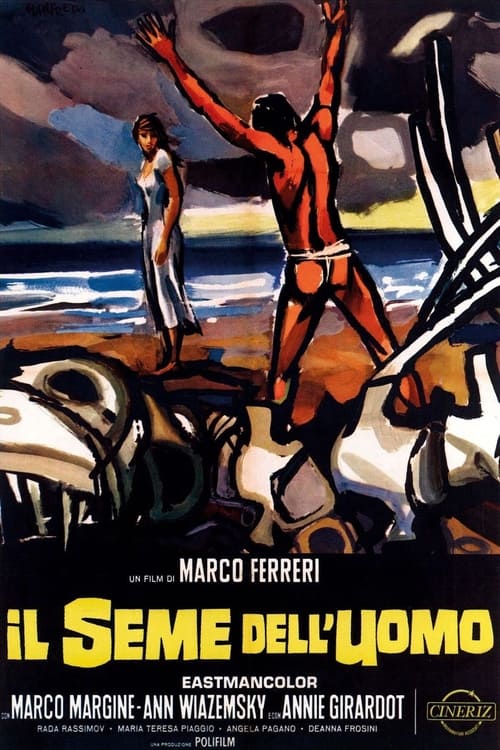
The Seed of Man
1969
No user ratings available yet
Diversity score: 5.1 out of 10
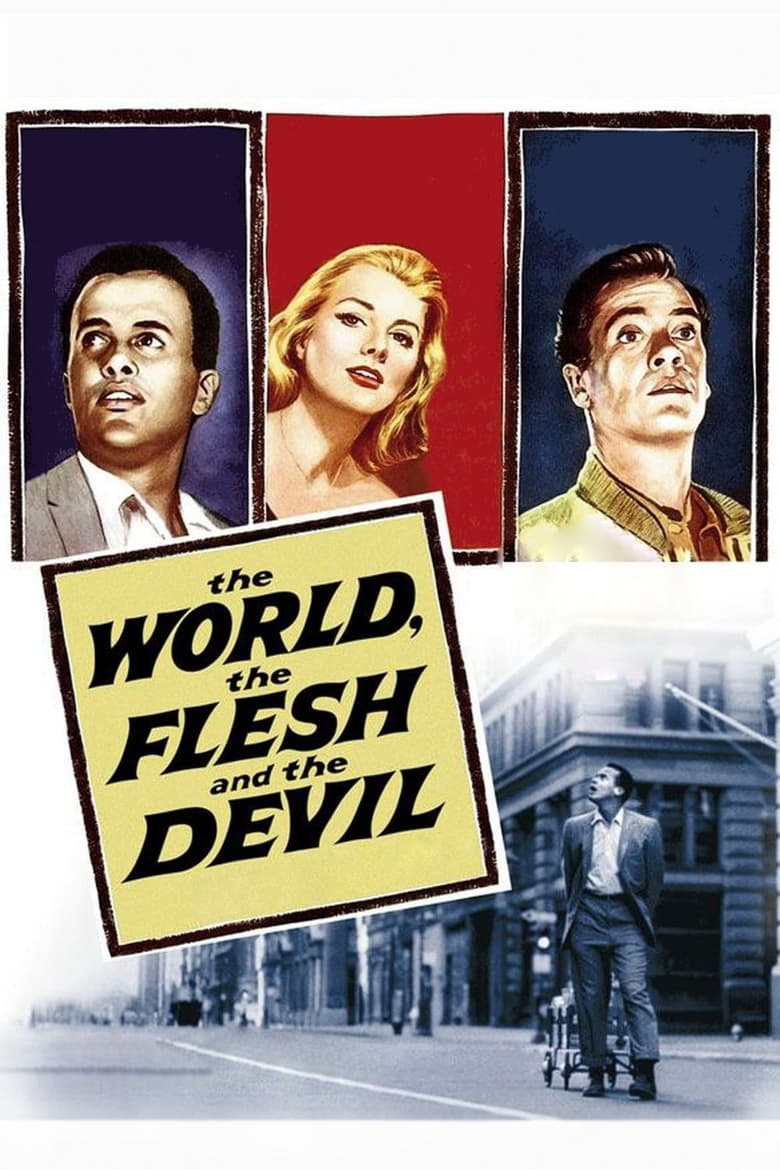
1959
ApprovedDirector
Ranald MacDougall
Runtime
95 minutes
Average Rating
No ratings yetSynopsis
Ralph Burton is a miner who is trapped for several days as a result of a cave-in. When he finally manages to dig himself out, he realizes that all of mankind seems to have been destroyed in a nuclear holocaust. He travels to New York City only to find it deserted. Making a life for himself there, he is flabbergasted to eventually find Sarah Crandall, who also managed to survive. Together, they form a close friendship until the arrival of Benson Thacker who has managed to pilot his small boat into the city's harbor. At this point, tensions rise between the three, particularly between Thacker, who is white, and Burton, who is black.
Overall Score
Limited
Category Breakdown
LGBTQ+ Representation
The film operates entirely within traditional 1950s paradigms. There is no evidence of queer subtext or non-cisnormative identities within this heteronormative survivalist framework.
Gender Representation
A starkly gender-imbalanced hierarchy dominates the narrative. By focusing on male psychological disintegration, the film marginalizes female agency and reinforces a strictly patriarchal dynamic.
Racial & Ethnic Diversity
Racial friction serves as a central driver of conflict. The film provides meaningful representation by placing a Black protagonist in a position of agency amidst a predominantly white cast.
Religious & Cultural Diversity
The story explores the collapse of Western social structures and traditional morality. It portrays the breakdown of social order through a lens of psychological savagery and nihilism.
Disability Representation
There is no discernible representation of physical, sensory, or neurodivergent disabilities. Characters are defined solely by their physical capacity for survival.
Strengths
Areas for Improvement
AI Analysis
The film functions as a psychological study of isolation that relies heavily on traditional 1950s cinematic constraints. While it avoids many progressive tropes, it finds its most significant depth through the racial tension between its central characters. However, the narrative is severely limited by a near-total absence of gender diversity and LGBTQ+ representation. The focus remains almost exclusively on masculine archetypes and the erosion of social structures. Ultimately, the work is a study of systemic collapse rather than an intentional effort toward intersectional inclusion, resulting in a low overall score.
No reviews yet. Be the first to share your thoughts on this movie!
Use the rating form above to leave a star rating and optional review.