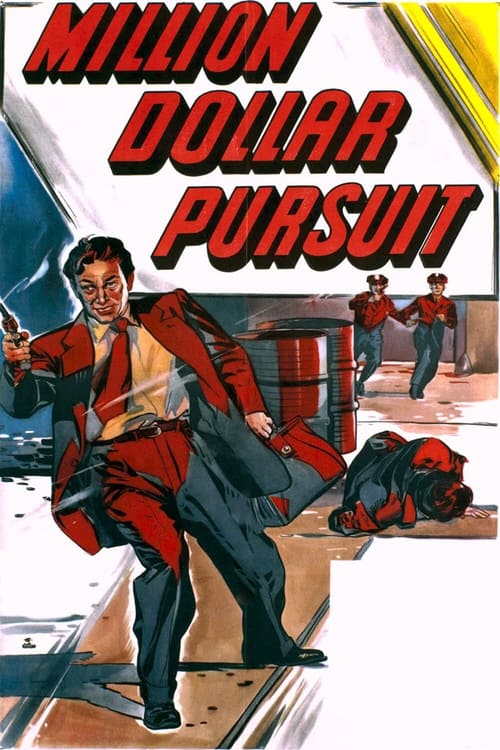
Million Dollar Pursuit
1951
No user ratings available yet
Representation score: 0.3 out of 10

Representation Score
Minimal
1950
NRDirector
Richard Fleischer
Runtime
67 minutes
Average Rating
No ratings yetNew Showbiz Analysis
Armored Car Robbery is a typical mid-century crime noir that prioritizes the mechanics of a heist and suspense over social exploration. The narrative reinforces established hierarchies, focusing on masculine competition and traditional authority. The film lacks intentionality regarding diverse identities. It functions as a genre piece that upholds the social norms of 1950s cinema through its casting and character motivations. Ultimately, the work serves to stabilize the social order by depicting law enforcement as a competent force against individual moral failures.
Category Breakdown
The film follows a strictly heterosexual structure. The plot centers on the romantic and transactional bond between Dave Purvis and Yvonne, with no queer subtext present.
Men play a central role in the film, particularly among the criminals and law enforcement. While Yvonne is a key figure, her role is defined by her greed and her relationship to Purvis.
The cast is largely homogeneous, reflecting the era's crime cinema norms. The Los Angeles setting features a predominantly white criminal underworld without significant characters of color.
The story operates within a conventional moral framework. It focuses on individual greed and the competence of law enforcement rather than critiquing systemic or institutional corruption.
No visible or invisible disabilities are portrayed. Characters are defined by their physical capability and criminal prowess, lacking any engagement with neurodivergence or physical impairment.
Present on Screen
Limited or Absent
Official Synopsis
While executing an armored car heist in Los Angeles, icy crook Dave Purvis shoots policeman Lt. Phillips before he and his cronies make off with the loot. Thinking he got away scot-free, Purvis collects his money-crazy mistress, Yvonne, then disposes of his partners and heads out of town. What Purvis doesn't know is that Phillips' partner, tough-as-nails Lt. Cordell, is wise to the criminal's plans and is closing in on his prey.
1951
1954
1957
1952
1961
1949
1956

1955
No reviews yet. Be the first to share your thoughts on this movie!
Use the rating form above to leave a star rating and optional review.