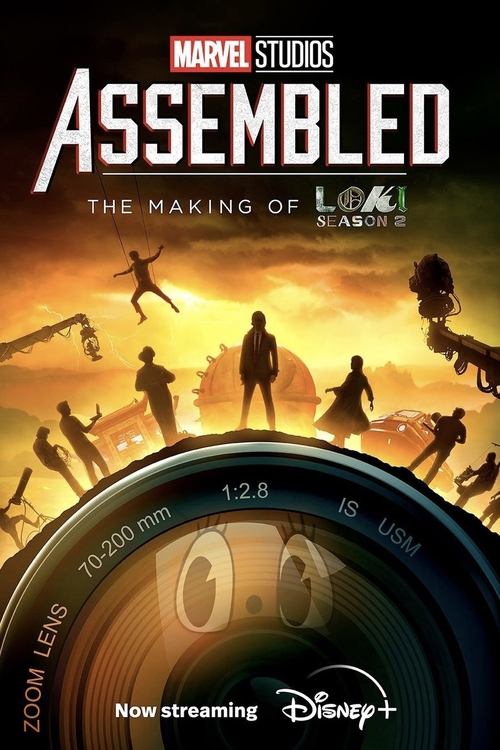
Marvel Studios Assembled: The Making of Loki Season 2
2023
No user ratings available yet
Representation score: 9.2 out of 10
Representation Score
Good
2021
TV-14Average Rating
No ratings yetNew Showbiz Analysis
This behind-the-scenes featurette balances traditional production dynamics with progressive character development. The explicit discussion of Loki’s non-binary identity stands out as a significant element, framed as essential to the character’s development rather than an afterthought. Female cast members are given an equal platform to discuss their roles, though the creative leadership remains male-dominated. Racial diversity is present through Gugu Mbatha-Raw’s casting, but it is not the central focus of the documentary. The portrayal of the TVA as an oppressive system aligns with themes of individual freedom versus bureaucratic control. Disability representation is largely absent, as the narrative focuses on time and identity rather than physical or mental conditions. The result is a nuanced look at how diversity is integrated into a major franchise, offering moderate but meaningful representation across several categories.
Category Breakdown
The featurette centers Loki’s shift to they/them pronouns as a core character arc. Tom Hiddleston and the writers frame this non-binary exploration as essential to the production’s creative choices. No same-sex romance is depicted, but the identity discussion remains prominent.
Male leads drive the primary creative discussions, yet female cast members receive equal interview time. Sophia Di Martino and Gugu Mbatha-Raw discuss their characters’ combat roles and decision-making. The production environment reflects standard industry dynamics without subverting traditional leadership structures.
Gugu Mbatha-Raw appears in a major antagonist role, with the featurette highlighting her casting and screen presence. The discussion does not center racial dynamics, and the majority of the creative team and lead cast are white. This reflects the typical demographic makeup of the production.
The TVA is portrayed as a sterile, authoritarian bureaucracy that suppresses individual variation. The documentary frames this system as oppressive, contrasting it with Loki’s chaotic nature. No specific religious or national institutions are critiqued, but the theme of systemic control over personal identity is prominent.
No characters with physical or mental disabilities are central to the production story or the show’s narrative. The featurette focuses on time-travel mechanics and character identity rather than disability. There is no discussion of neurodivergence or chronic illness as a lived condition.
Present on Screen
Limited or Absent
2023
2019
2022
2022

2022

2023
2022
2024
No reviews yet. Be the first to share your thoughts on this movie!
Use the rating form above to leave a star rating and optional review.