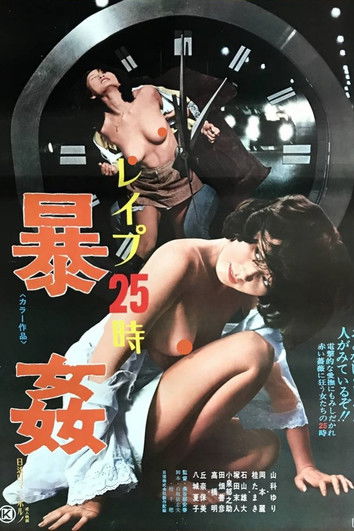
Rape! 13th Hour
1977
No user ratings available yet
Representation score: 2.9 out of 10
Representation Score
Minimal
1978
Director
Yasuharu Hasebe
Runtime
69 minutes
Average Rating
No ratings yetNew Showbiz Analysis
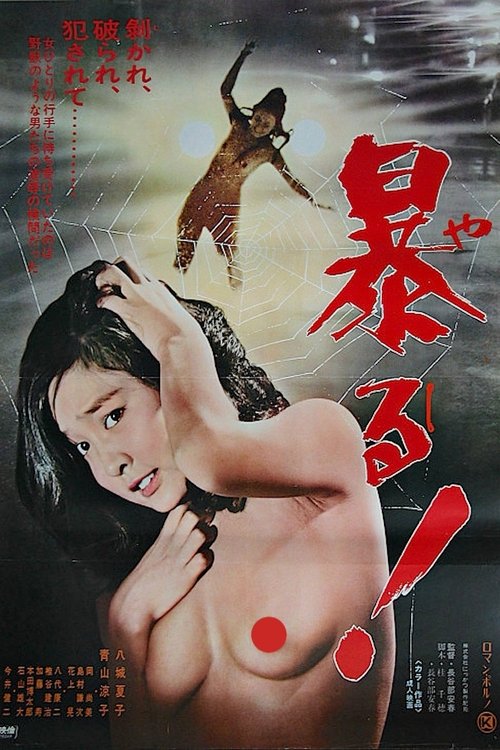
Raping! (1978) is a grim exploration of victimization that relies heavily on extreme gender-based violence. Instead of challenging power dynamics, the film reinforces patriarchal aggression and strips the main character of her ability to drive the story. The narrative structure is defined by its focus on trauma and predatory behavior. While it captures the transgressive spirit of the Nikkatsu Roman Porno genre, it lacks the complexity needed for progressive representation. Ultimately, the film remains confined to the traditional demographic and thematic boundaries of its era, offering little in the way of diverse perspectives.
Category Breakdown
The film focuses on heterosexual predatory dynamics and does not include any non-straight or non-cisgender identities. There is no critique of the assumption that everyone is straight or cisgender.
The narrative depicts a hierarchy where gendered violence is prevalent. While the main character is a woman, her ability to drive the story is systematically stripped away by male characters.
The film likely features a homogeneous Japanese cast typical of its Nikkatsu production context. There is no indication of casting actors from diverse backgrounds.
The story explores social dysfunction and the breakdown of order on the outskirts of urban expansion. It focuses on individual trauma rather than broader social critiques.
There is no representation of physical, neurodivergent, or sensory disabilities within the narrative.
Present on Screen
Limited or Absent
Official Synopsis
A woman on her way to Tokyo is repeatedly raped by various men she encounters on the highway.
1977

1977
1978
1976
2003
1985

1982
1987
No reviews yet. Be the first to share your thoughts on this movie!
Use the rating form above to leave a star rating and optional review.