
Lovey-Dovey
2007
No user ratings available yet
Representation score: 3.3 out of 10
Representation Score
Minimal
1940
ApprovedDirector
Hal Roach
Runtime
83 minutes
Average Rating
No ratings yetNew Showbiz Analysis
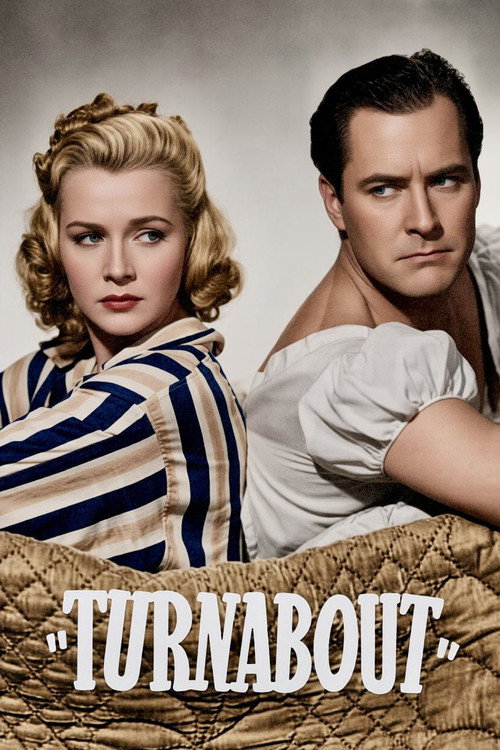
Turnabout is a classic domestic fantasy comedy that relies on a supernatural body-swap conceit to drive its humor. While the premise offers a temporary subversion of gendered expectations, the film remains firmly rooted in the social archetypes of its era. The narrative uses the disruption of marital roles as a comedic engine rather than a vehicle for social critique. This approach prioritizes situational slapstick over meaningful exploration of identity or systemic hierarchy. Ultimately, the film adheres to the conventional cultural and social frameworks prevalent in 1940s American cinema, lacking the depth found in more diverse works.
Category Breakdown
The film focuses solely on the marital relationship between a husband and wife. There is no depiction of LGBTQ+ identities or same-sex relationships.
A role-reversal cliché temporarily disrupts traditional gender hierarchies by forcing characters into the opposite sex's lived experiences. However, these disruptions serve as comedic devices rather than tools for establishing permanent ability to act.
The film follows conventional 1940s casting patterns centered on a standard domestic unit. There is no indication of a diverse or non-Anglo-Saxon majority cast.
The narrative centers on the traditional Western institution of marriage. It reinforces social structures by framing role disruption as a comedic mishap rather than a systemic deconstruction.
No characters with visible or invisible disabilities are identified within the film's context or synopsis.
Present on Screen
Limited or Absent
Official Synopsis
Bickering husband and wife Tim and Sally Willows mutter a few angry words to a statue who grants their wish and they wind up living each other's life.
2007
1941
2006

1940

1914
1984
1988

1996
No reviews yet. Be the first to share your thoughts on this movie!
Use the rating form above to leave a star rating and optional review.