
Interrail
2018
No user ratings available yet
Representation score: 6.2 out of 10
Representation Score
Fair
1986
Director
Jacques Rozier
Runtime
136 minutes
Average Rating
No ratings yetNew Showbiz Analysis
Jacques Rozier’s film offers a moderate level of diversity by highlighting female professional ability to act and non-Western characters within a European transit setting. It avoids rigid, mainstream storytelling clichés in favor of a more fluid, observational approach to social interaction. While the film disrupts homogeneous travel narratives through Dejanira's presence, it remains limited by a lack of explicit LGBTQ+ representation. The focus remains on chance encounters and episodic adventures rather than overt identity politics. Ultimately, the work functions as a progressive piece of narrative structure that favors character-driven exploration over traditional, institutionalized plot structures.
Category Breakdown
The film does not explicitly depict LGBTQ+ identities or non-straight relationships. Instead, it focuses on chance encounters between travelers during a train journey.
Female characters like Dejanira and Mimi play significant roles in driving the story. Mimi, a lawyer, challenges traditional gender hierarchies through her intellect and authority.
The inclusion of Dejanira, a Brazilian character, introduces meaningful non-European presence. This presence disrupts the homogeneous depiction of Western travel within the French setting.
The film prioritizes situational experience and secular human connection over traditional religious or institutional values. The train setting serves as a fluid, liminal space for these encounters.
There is no evidence regarding the portrayal of physical or neurodivergent disabilities within the narrative.
Present on Screen
Limited or Absent
Official Synopsis
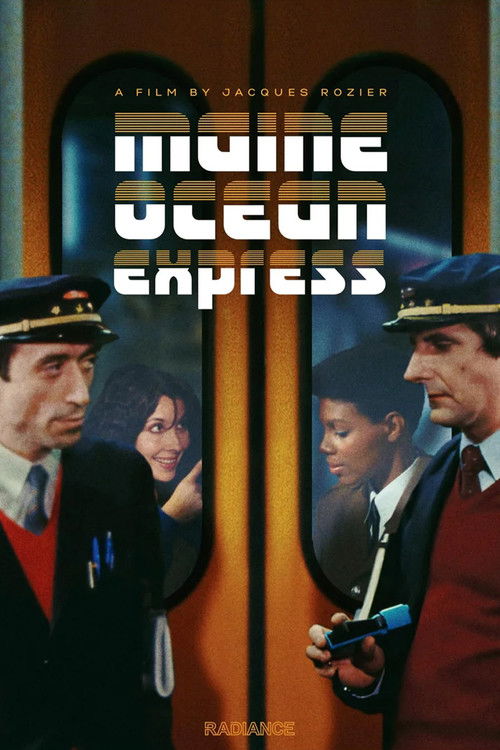
"Maine-Ocean" is the name of a train that rides from Paris to Saint-Nazaire (near the ocean). In that train, Dejanira, a Brazilian, has a brush with the two ticket inspectors. Mimi, another traveler and also a lawyer, helps her. The four of them will meet together later and live a few shifted adventures with a strange-speaking sailor (Mimi's client).
2018

1969
1984

1979

2013
1994

1981

2011
No reviews yet. Be the first to share your thoughts on this movie!
Use the rating form above to leave a star rating and optional review.