Find another title
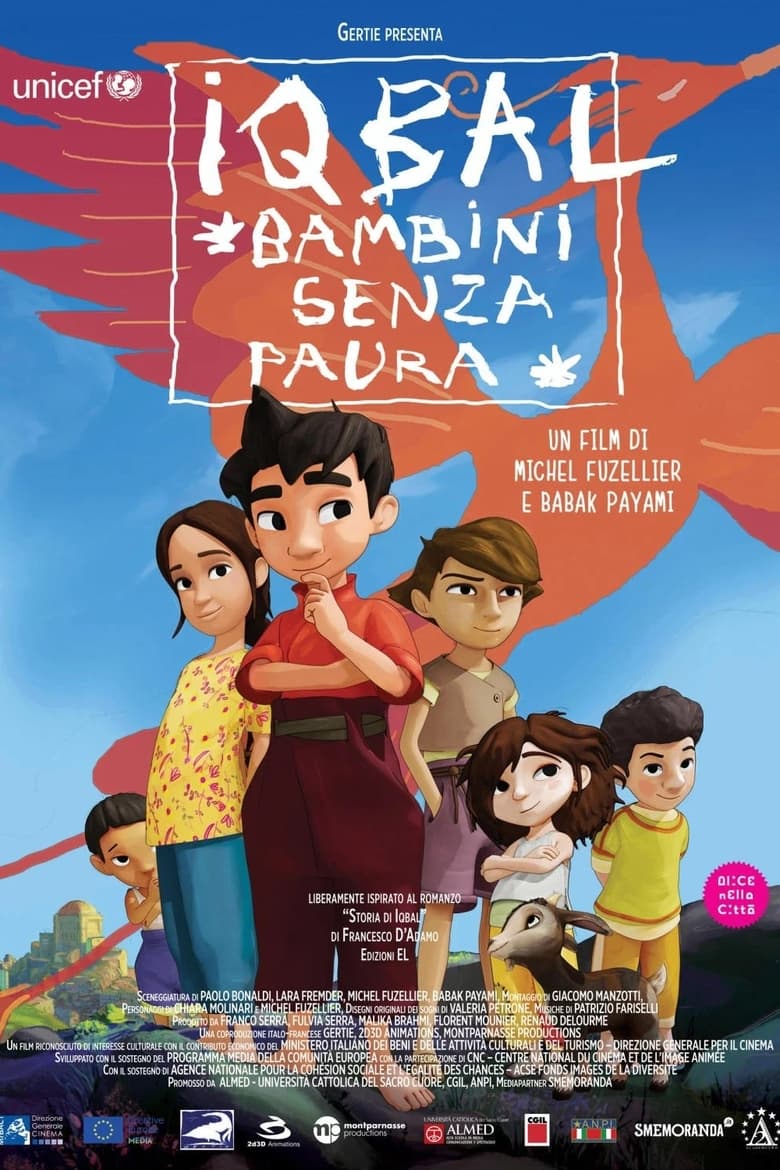
Iqbal, a Tale of a Fearless Child
2015
Director
Michel Fuzellier, Babak Payami
Runtime
87 minutes
Average Rating
No ratings yetSynopsis
A little boy, Iqbal, is kidnapped by a carpet dealer who forces him to work in his workshop. With no fear or reproach, he will do everything he can to save himself and his unfortunate friends.
Where to Watch
Diversity & Representation
Overall Score
Good
Category Breakdown
LGBTQ+ Representation
The film lacks LGBTQ+ characters or explorations of non-heteronormative identities. The narrative focuses strictly on the socioeconomic and survivalist struggles of the protagonist.
Gender Representation
The story follows a traditional character framework. While Iqbal shows significant agency and leadership, the film does not actively seek to subvert gender hierarchies or roles.
Racial & Ethnic Diversity
The film excels by centering an Indian cast and setting. This disrupts Western-centric animation standards by providing a rich, non-Anglo-Saxon perspective of urban India.
Religious & Cultural Diversity
The narrative critiques global economic structures and the morality of child labor. It uses a post-colonial framework to highlight the struggle of the marginalized against exploitative institutions.
Disability Representation
The film does not explicitly center neurodivergence or visible physical disabilities. Instead, it uses the systemic disenfranchisement of children as a metaphorical form of vulnerability.
Strengths
- Authentic cultural placement through an Indian cast and setting.
- Sophisticated critique of systemic economic oppression and child labor.
- Strong disruption of Western-centric animation standards.
Areas for Improvement
- Lack of LGBTQ+ representation or non-heteronormative identities.
- Minimal subversion of traditional gender hierarchies.
- Absence of explicit focus on neurodivergence or physical disabilities.
AI Analysis
Iqbal, a Tale of a Fearless Child, distinguishes itself from mainstream animation by centering South Asian social realities rather than Western-centric tropes. The film's primary strength is its authentic cultural placement and its sophisticated critique of systemic oppression and capitalist hierarchies. However, the narrative remains limited in its exploration of identity. It lacks representation for LGBTQ+ communities and does not actively challenge traditional gender roles or center specific physical or neurodivergent disabilities. Ultimately, the film succeeds as an intersectional study of class and ethnicity. It provides a powerful voice to those marginalized by global economic structures, even while adhering to more conventional social frameworks.
Rate this Movie
Reviews
No reviews yet. Be the first to share your thoughts on this movie!
Use the rating form above to leave a star rating and optional review.