Robin Robin
2021
No user ratings available yet
Representation score: 7.7 out of 10
Representation Score
Good
2017
PGDirector
Toby Genkel
Runtime
85 minutes
Average Rating
No ratings yetNew Showbiz Analysis
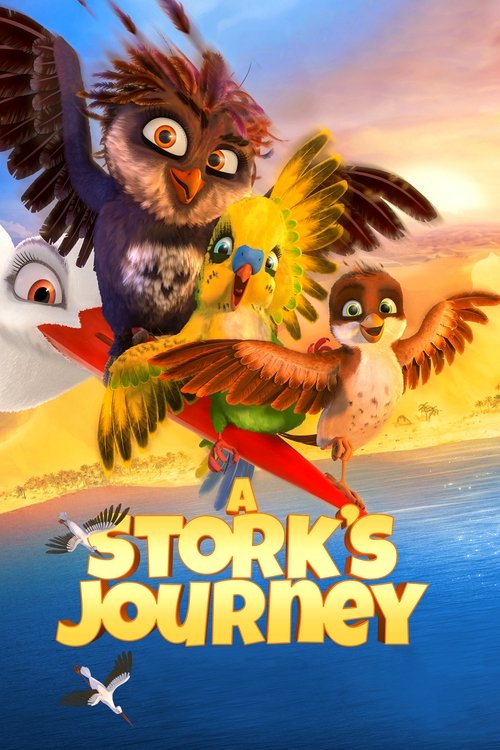
A Stork's Journey uses animal characters to explore themes of identity and belonging. By focusing on a sparrow raised by storks, the film delves into the tension between biological roots and personal choices. The film stands out by using its diverse cast to challenge conventional structures. The transition from a biological family to a group of eccentric friends creates a powerful platform for discussing alternative social units. Though the film doesn't explicitly highlight multi-layered issues, its metaphorical approach offers a meaningful look at what it means to exist outside societal norms.
Category Breakdown
The film doesn't show same-sex intimacy or characters with non-cisgender identities explicitly. However, the protagonist's journey of self-discovery outside traditional family roles hints at similar experiences faced by those exploring their queer identity.
Female characters like Olga and Kiki aren't portrayed as typical mothers. Instead, they have distinct personalities and play significant roles in the story, challenging traditional gender roles.
The film uses anthropomorphic animals to represent different groups and their struggles. For example, a sparrow's journey to navigate a world dominated by storks mirrors the experience of individuals who feel underrepresented in societies dominated by certain groups.
The story questions the idea of an unbreakable family unit by showing a biological family that leaves the protagonist behind. It emphasizes the importance of a chosen family over biological ties.
Olga, an owl with an imaginary friend, introduces elements of neurodiversity. This inclusion reflects non-standard ways of thinking and seeing the world within a mainstream animated setting.
Present on Screen
Limited or Absent
Official Synopsis
Orphaned at birth and raised by storks, teenage sparrow Richard believes he is one of them. But when time comes to migrate to Africa, his stork family is forced to reveal his true identity and leave him behind in the forest, since he is not a migratory bird and would not survive the journey. Determined to prove he is a stork after all, Richard ventures south on his own. But only with the help of Olga, an eccentric owl with an imaginary friend and Kiki, a narcissistic, disco-singing parakeet, does he stand a chance to reach his goal and learn to accept who he really is.
2021
2022
2022

2014
2019
2021
2014
1982
No reviews yet. Be the first to share your thoughts on this movie!
Use the rating form above to leave a star rating and optional review.