Find another title
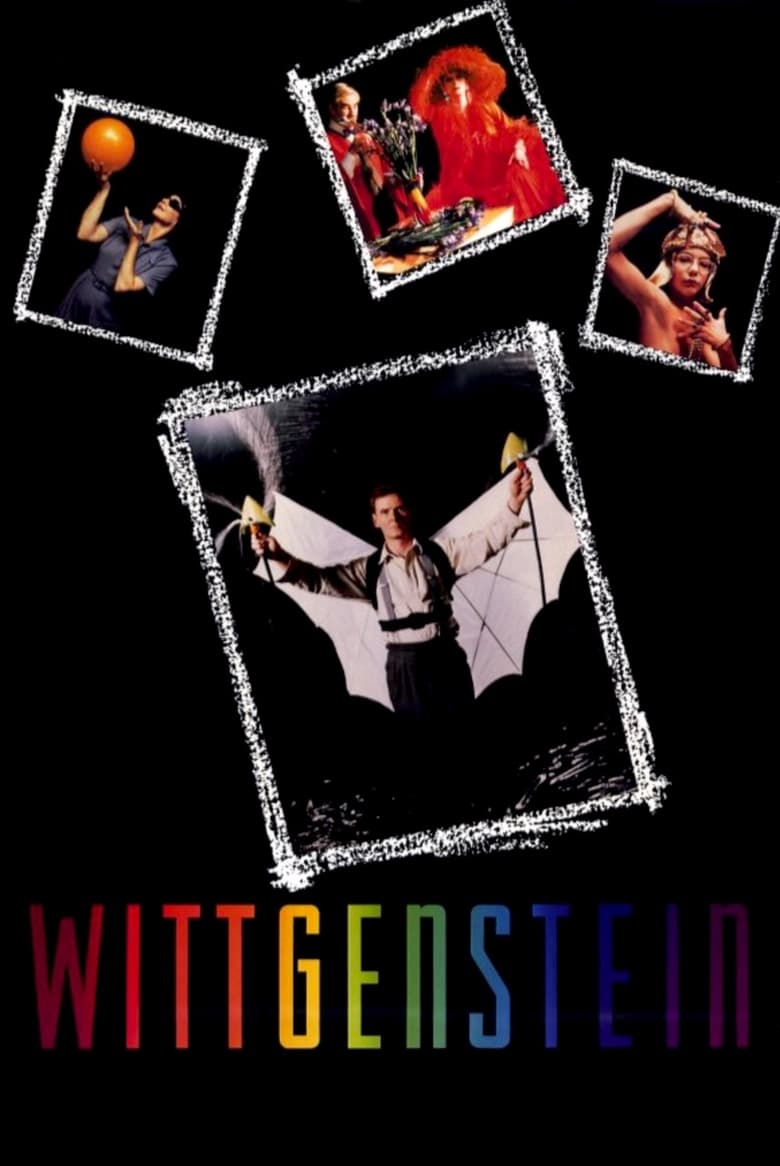
Wittgenstein
1993
NRDirector
Derek Jarman
Runtime
75 minutes
Average Rating
No ratings yetSynopsis
A dramatization, in modern theatrical style, of the life and thought of the Viennese-born, Cambridge-educated philosopher Ludwig Wittgenstein, whose principal interest was the nature and limits of language. A series of sketches depict the unfolding of his life from boyhood, through the era of the first World War, to his eventual Cambridge professorship and association with Bertrand Russell and John Maynard Keynes. The emphasis in these sketches is on the exposition of the ideas of Wittgenstein, a homosexual, and an intuitive, moody, proud, and perfectionistic thinker generally regarded as a genius.
Where to Watch
Diversity & Representation
Overall Score
Good
Category Breakdown
LGBTQ+ Representation
Queer desire and male-to-male intimacy serve as the primary engine of the narrative. The film moves beyond mere representation to explore profound queer subjectivity and emotional bonds.
Gender Representation
The film deconstructs masculine archetypes by portraying traditional decorum as a restrictive performance. However, the focus remains heavily concentrated on male-centric intellectual circles.
Racial & Ethnic Diversity
The story reflects the demographic homogeneity of early 20th-century Cambridge and Austria. It lacks significant racial diversity, focusing almost exclusively on a Eurocentric intellectual tradition.
Religious & Cultural Diversity
The narrative critiques rigid Western institutions and social structures. It uses philosophical inquiry to suggest that truth is shaped by the boundaries of communication rather than objective constructs.
Disability Representation
While lacking explicit physical disability, the film offers a nuanced portrayal of neurodivergence. Wittgenstein’s moody, perfectionistic temperament is presented as a fundamental component of his genius.
Strengths
- Integrates queer intimacy as a central narrative driver rather than a subplot.
- Deconstructs traditional masculine archetypes through emotionally volatile characterizations.
- Provides a sophisticated portrayal of neurodivergent cognitive processes and psychological isolation.
Areas for Improvement
- Lacks racial and ethnic diversity due to its narrow historical focus.
- Concentrates heavily on male-centric circles, limiting the scope of gender subversion.
AI Analysis
Derek Jarman’s portrait of Ludwig Wittgenstein is a stylized, non-linear deconstruction of identity. It succeeds by centering queer intimacy and challenging the stoic masculine archetypes of mid-century intellectualism. The film treats the protagonist's idiosyncratic temperament as a source of agency rather than a deficit. However, the film is limited by its historical setting, which results in a lack of racial and ethnic diversity. The narrative remains deeply embedded in a Western, Eurocentric intellectual enclave. Ultimately, the work excels in its sophisticated subversion of social hierarchies and its exploration of psychological landscapes, even as it remains geographically and demographically narrow.
Rate this Movie
Reviews
No reviews yet. Be the first to share your thoughts on this movie!
Use the rating form above to leave a star rating and optional review.