
Eat Your Makeup
1968
No user ratings available yet
Diversity score: 5.6 out of 10
1970
RDirector
Freddie Francis
Runtime
102 minutes
Average Rating
No ratings yetSynopsis
A wealthy, fatherless British clan kidnap bums and hippies, forcing them to participate in an elaborate role-playing game in which they are the perfect family; those who refuse or attempt escape endure ritualistic murder.
Overall Score
Fair
Category Breakdown
LGBTQ+ Representation
The film lacks explicit LGBTQ+ characters or non-heteronormative identities. The narrative focuses strictly on a distorted, insular domestic unit without queer semiotic markers.
Gender Representation
Female characters hold absolute, pathological authority, subverting the trope of the nurturing matriarch. Femininity is weaponized as a tool of control, challenging traditional patriarchal leadership models.
Racial & Ethnic Diversity
The cast is homogeneous, reflecting the socioeconomic and racial insulation of an upper-class British clan. The narrative operates within a strictly Anglo-Saxon, class-based framework.
Religious & Cultural Diversity
The film critiques Western institutions by portraying the nuclear family as a violent, ritualistic facade. It uses wealth and isolation to frame the upper class as a site of dysfunction.
Disability Representation
Psychological instability and madness drive the horror plot but lack nuanced exploration. Mental states serve narrative tension rather than providing depth to neurodivergence or mental health.
Strengths
Areas for Improvement
AI Analysis
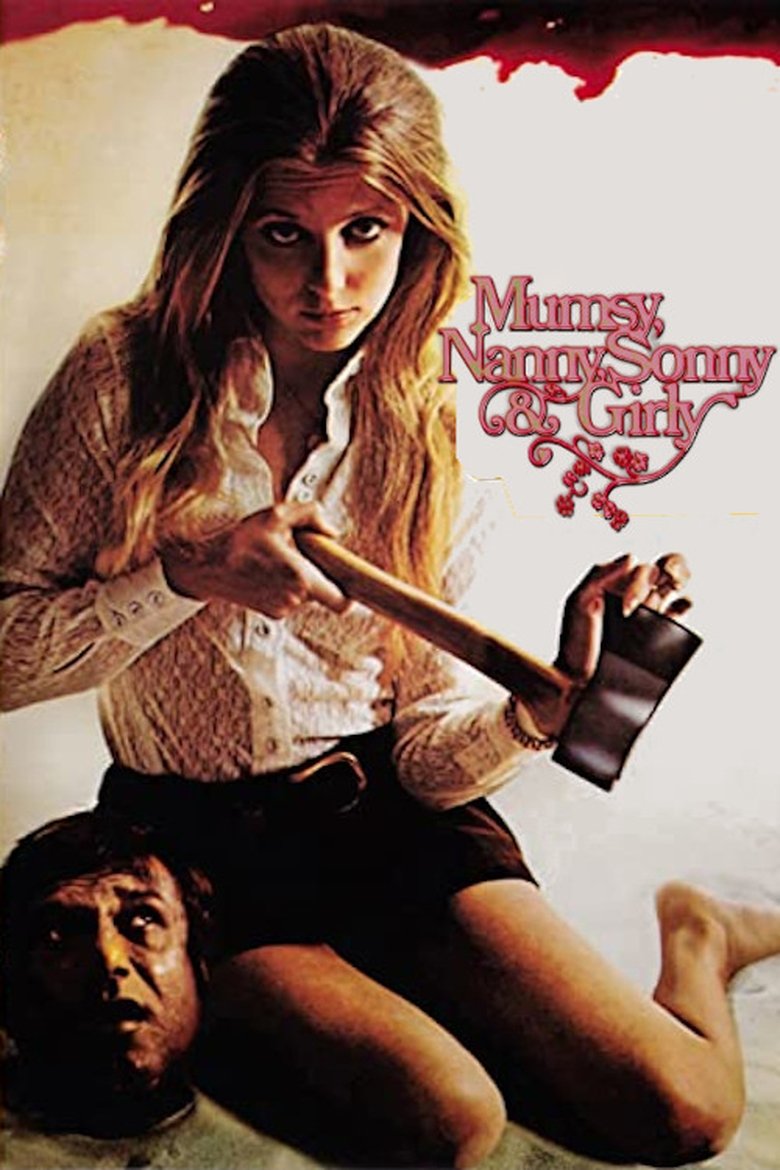
Mumsy, Nanny, Sonny & Girly is a genre-bending study of domestic corruption. It succeeds in deconstructing the Western ideal of the stable family unit, using horror to expose the rot within traditional social structures. However, the film is demographically narrow. It lacks racial and LGBTQ+ diversity, remaining confined to a homogeneous, upper-class British setting. While it subverts gender roles through female-led violence, it relies on the 'madness' trope rather than meaningful disability representation. Ultimately, the film's impact is cultural rather than intersectional. It offers a biting critique of class and institutional stability, even as it fails to represent a broad spectrum of human identities.
1968
1974

1992
1973
1990
2018
1966
2018
2014
2016
1973
1967
No reviews yet. Be the first to share your thoughts on this movie!
Use the rating form above to leave a star rating and optional review.