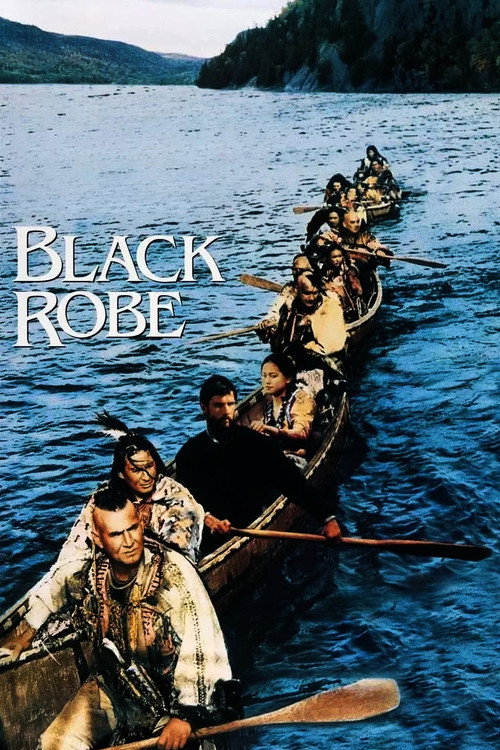
Black Robe
1991
No user ratings available yet
Representation score: 3.8 out of 10

Representation Score
Excellent
2017
Director
François Girard
Runtime
100 minutes
Average Rating
No ratings yetNew Showbiz Analysis
Hochelaga, Land of Souls centers Indigenous Canadian identities effectively. Using Anishinabeg and Wendat perspectives as the main lens, the film dismantles colonial authority and historical trauma. It excels in representing Indigenous cultures and critiquing Western institutions as agents of systemic violence. The film also explores how Western gender norms were used to assimilate Indigenous peoples. While the film lacks explicit LGBTQ+ representation and individual character studies of disabilities, it addresses these themes through systemic trauma and communal bonds.
Category Breakdown
The film focuses on communal bonds and ancestral ties rather than typical Western romance. It avoids clichés about straight relationships but does not show LGBTQ+ identities explicitly.
The story highlights how colonial powers disrupted Indigenous social structures and women's roles. It contrasts traditional community hierarchies with rigid, colonial-imposed patriarchy.
The film centers Anishinabeg and Wendat identities, focusing on their lived experiences and spiritualities. It goes beyond simple inclusion to explore Indigenous cultures deeply.
The movie portrays missionary systems and the Canadian state as forces of cultural destruction. It emphasizes Indigenous spirituality over Christian doctrine to critique Western expansion.
The story examines the psychological and intergenerational trauma caused by residential schools. Mental health issues are shown as systemic results of forced assimilation.
Present on Screen
Limited or Absent
Official Synopsis
Mohawk archaeologist Baptiste Asigny engages in a search for his ancestors following a tragic terrain slump in the Percival Molson Stadium.
1991

2017

2005
1972

2016

1992
1990

2017
No reviews yet. Be the first to share your thoughts on this movie!
Use the rating form above to leave a star rating and optional review.