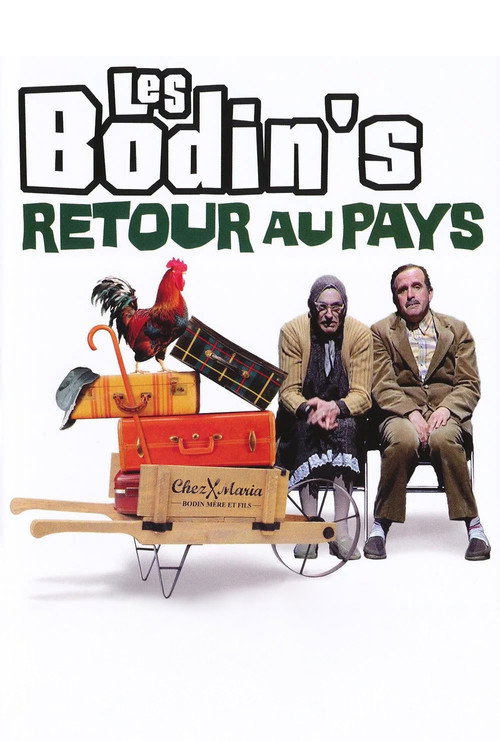
Les Bodin's - Retour au Pays
2012
No user ratings available yet
Diversity score: 4.9 out of 10

2007
Director
Simon-Olivier Fecteau, Marc-André Lavoie
Runtime
88 minutes
Average Rating
No ratings yetSynopsis
A building inspector uncovers a crumbling apartment building's long-buried secret.
Overall Score
Fair
Category Breakdown
LGBTQ+ Representation
The film uses a vignette structure to explore various interpersonal dynamics. However, there is no clear evidence of non-cisnormative identities or explicit critiques of heteronormativity within the narrative.
Gender Representation
The story shifts focus from a single male protagonist to a collective of tenants. Female characters appear in active roles, such as assisting with professional preparation or searching for lost property.
Racial & Ethnic Diversity
As a localized Quebecois comedy, the film appears to follow regional demographic norms. There is no indication of a non-white majority cast or significant racial diversity.
Religious & Cultural Diversity
The narrative critiques middle-class stability and domestic institutions through the lens of a decaying building. It explores themes of systemic neglect and the desperation of urban inhabitants.
Disability Representation
The provided character descriptions and plot summaries contain no specific information regarding the portrayal of physical or neurodivergent disabilities.
Strengths
Areas for Improvement
AI Analysis
Bluff operates as a fragmented social study rather than a traditional hero's journey. By utilizing a non-linear vignette format, the film avoids monolithic storytelling and instead highlights the messy, disparate lives of a community living within failing urban infrastructure. While the film avoids standard patriarchal hierarchies by centering a collective of tenants, it lacks significant intersectional depth. The representation of various identities appears incidental to the character studies rather than being a central thematic pillar. Ultimately, the film's strength lies in its structural deconstruction of social microcosms. However, it does not provide robust evidence of diverse racial, religious, or LGBTQ+ representation beyond the standard demographics of its Quebecois setting.
2012

2020
2007

2015
2004

2010

2002
2008
2004
2003

2007

2025
No reviews yet. Be the first to share your thoughts on this movie!
Use the rating form above to leave a star rating and optional review.