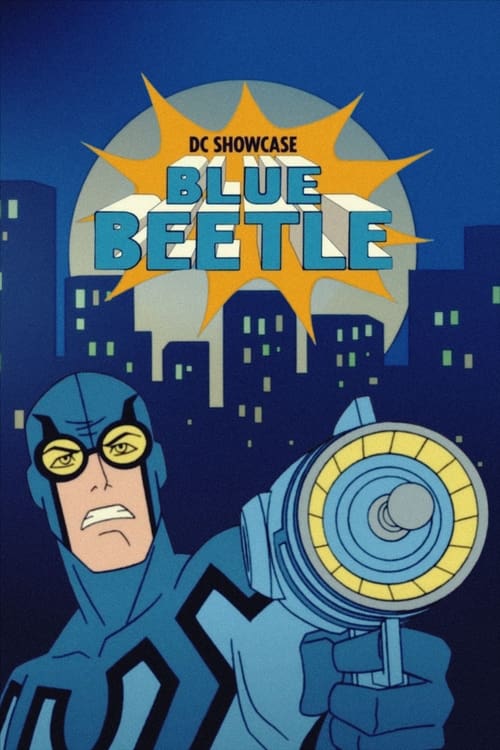
DC Showcase: Blue Beetle
2021
No user ratings available yet
Representation score: 7.5 out of 10

Representation Score
Good
2021
Director
Matt Peters
Runtime
18 minutes
Average Rating
No ratings yetNew Showbiz Analysis
Kamandi: The Last Boy on Earth! utilizes a post-apocalyptic setting to naturally deconstruct traditional societal hierarchies. By removing government and organized religion, the film creates a primal landscape defined by mutation rather than the old world order. While the short runtime prevents deep character studies, the world-building prioritizes a non-traditional reality. The film disrupts the status quo by focusing on survivalist tribalism rather than standardized human social structures. However, the lack of explicit multi-layered development and the male-centric protagonist group limit its overall impact. The representation remains largely tied to genre-standard sci-fi elements rather than intentional social commentary.
Category Breakdown
The film does not explicitly depict LGBTQ+ identities or relationships outside of traditional heterosexual norms. The narrative focuses on the survival of the central trio.
The story centers on a male-dominated trio consisting of Kamandi, Prince Tuftan, and Ben Boxer. It does not actively challenge traditional gender roles through strong female characters.
The setting uses mutant and humanoid archetypes to suggest biological diversity. Prince Tuftan’s Tiger Kingdom offers a departure from standard Western archetypes through fantastical world-building.
The narrative replaces traditional Western institutions with tribalism and cult-like structures. The gorilla cult serves as a critique of organized dogma and established cultural morality.
Humanoid mutants represent a departure from normative human biology. However, it is unclear if these physical differences grant characters real ability to act or merely serve as plot devices.
Present on Screen
Limited or Absent
Official Synopsis
Kamandi and his friends Prince Tuftan of the Tiger Kingdom and humanoid mutant Ben Boxer are kidnapped by a gorilla cult dedicated to finding the reincarnation of their god, The Mighty One. Golgan, the cult’s leader, puts Kamandi’s team through a series of deadly tests to find if any of them know the secret of … The Mighty One.
2021
2022

2021
2020
1982
2019
1982

2011
No reviews yet. Be the first to share your thoughts on this movie!
Use the rating form above to leave a star rating and optional review.