Find another title
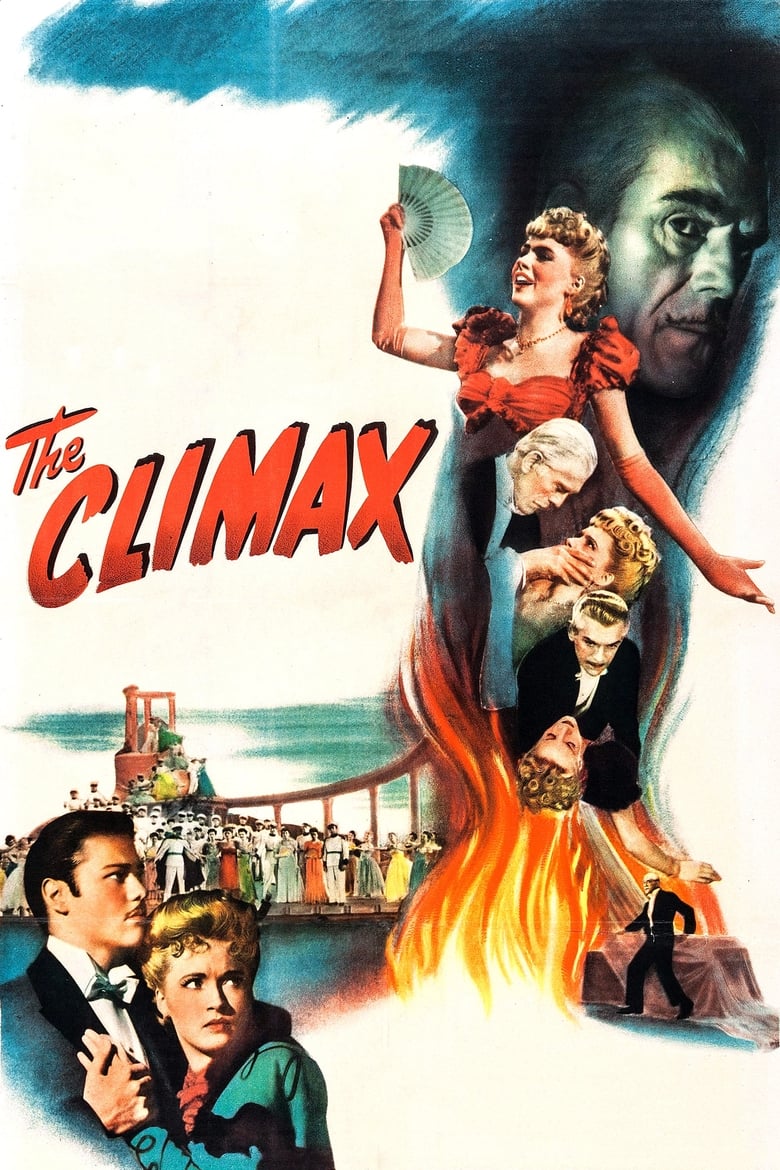
The Climax
1944
ApprovedDirector
George Waggner
Runtime
86 minutes
Average Rating
No ratings yetSynopsis
Dr. Hohner, theatre physician at the Vienna Royal Theatre, murders his mistress, the star soprano when his jealousy drives him to the point of mad obsession. Ten years later, another young singer reminds Hohner of the late diva and his old mania kicks in. Hohner wants to prevent her from singing for anyone but him, even if it means silencing her forever.
Where to Watch
Diversity & Representation
Overall Score
Limited
Category Breakdown
LGBTQ+ Representation
The film centers on a heterosexual romantic obsession. There is no evidence of non-cisnormative identities or narratives that critique heteronormativity.
Gender Representation
Female characters function primarily as objects of male obsession. Their agency is framed through the lens of being controlled or silenced by a dominant male figure.
Racial & Ethnic Diversity
The setting suggests a homogeneous European cast. The film appears to adhere to the era's standard of depicting white-centric high society.
Religious & Cultural Diversity
The narrative focuses on individual moral failings within a traditional Western setting. It does not prioritize secularism or critiques of Western institutions.
Disability Representation
Mental instability is used as a plot device to drive horror elements. This risks using a character's condition as a trope for villainy.
Strengths
- The film provides a technically proficient example of 1940s atmospheric horror and thriller filmmaking.
Areas for Improvement
- The narrative reinforces traditional gender hierarchies by treating female characters as objects of male obsession.
- Mental instability is utilized as a villainous trope rather than a nuanced depiction of neurodivergence.
- The setting lacks racial and ethnic diversity, adhering to a homogeneous, white-centric view of European high society.
AI Analysis
The Climax is a traditional psychological thriller that adheres to the social and narrative constraints of 1944 cinema. It focuses on a singular, destructive male obsession rather than exploring systemic or identity-based themes. The film relies on mid-century tropes, particularly regarding gender and mental health. While the plot is driven by the protagonist's mania, it lacks a nuanced exploration of neurodivergence, instead using instability to fuel the thriller elements. Ultimately, the work functions as a period-specific genre piece. It reinforces existing hierarchies by centering on a white-centric, European high-society setting and framing female characters as catalysts for male pathology.
Rate this Movie
Reviews
No reviews yet. Be the first to share your thoughts on this movie!
Use the rating form above to leave a star rating and optional review.