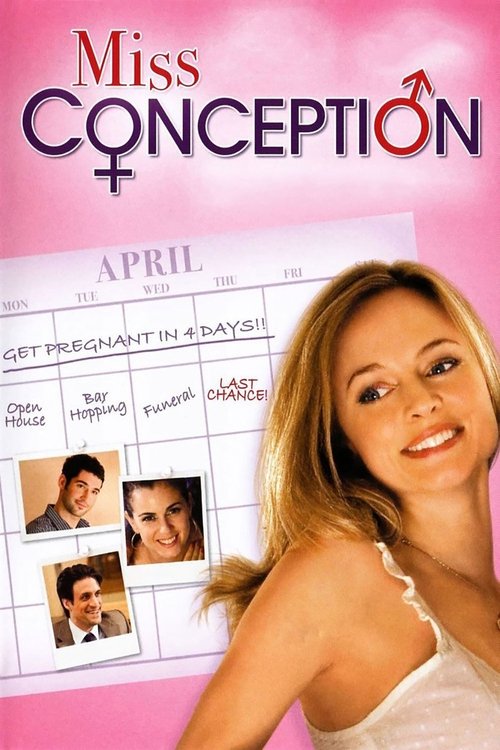
Miss Conception
2008
No user ratings available yet
Diversity score: 4.3 out of 10

1998
Director
John Ruane
Runtime
95 minutes
Average Rating
No ratings yetSynopsis
After years of having her letters to her estranged father come back as undeliverable, a young woman takes a job at a Dead Letter Office. She hopes to figure out how to locate her father. Unexpectedly, she finds a potential romance and begins to learn more about herself.
Overall Score
Fair
Category Breakdown
LGBTQ+ Representation
The film follows a standard heteronormative romantic arc. There is no evidence of queer narratives or non-cisnormative identities within the story.
Gender Representation
The narrative is driven by female agency. The protagonist actively navigates a bureaucratic system to achieve her personal goals rather than remaining a passive character.
Racial & Ethnic Diversity
A multicultural ensemble is suggested by cast members like Georgina Naidu and Malcolm Singh. However, it is unclear how these identities impact the core power dynamics.
Religious & Cultural Diversity
The film critiques traditional familial structures by focusing on an estranged father. It uses the dead letter office as a metaphor for broken social connections.
Disability Representation
There is no documented evidence regarding the portrayal of physical or neurodivergent disabilities in this film.
Strengths
Areas for Improvement
AI Analysis
Dead Letter Office is a character-driven exploration of autonomy. It succeeds in centering a female protagonist's journey of self-actualization, moving beyond the typical secondary role for women in romantic comedies. This focus on individual agency provides a refreshing departure from traditional institutional stability. However, the film remains within the conventional bounds of its era. The romantic structure is strictly heteronormative, and while the cast is multicultural, the narrative depth of these diverse identities is not explicitly defined. The film prioritizes personal discovery over radical identity politics. Ultimately, the work functions as a study of fractured connections. It uses its unique setting to deconstruct the stability of the nuclear family, offering a more subjective view of morality and connection.
2008

2003

2019

2010

2022
1999
2007
2006

1996
1996
2006

2011
No reviews yet. Be the first to share your thoughts on this movie!
Use the rating form above to leave a star rating and optional review.